A Site for Emerging Artists
Trade Shows
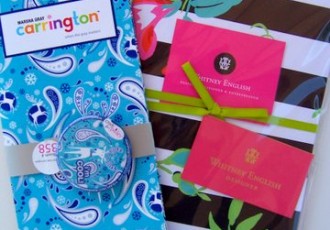
Focus on Art Licensing at Surtex
May 16th
By Carolyn Edlund
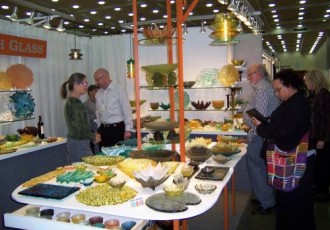
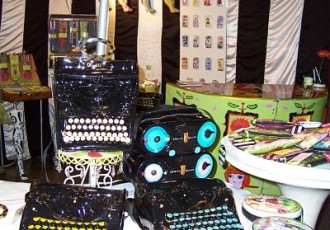
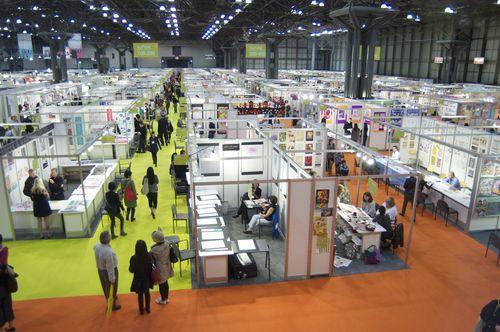
This coming weekend, on May 20-22, the Surtex show takes place at the Javits Center in New York City. Artists attend Surtex with the intention of meeting prospects to connect with for licensing opportunities. Manufacturers and others walk the show to find new fresh images that will appeal to their customers, to be used in product design.
Work is displayed at the show by international artists and designers who come to this yearly event, and those designs end up on a huge variety of products that we all use every day. New trends start at Surtex, so basically what you see there is the future – art and surface design that will appear on products during the next year or so. A “trend theater” event will be taking place right on the show floor, where experts in trend forecasting give daily presentations.
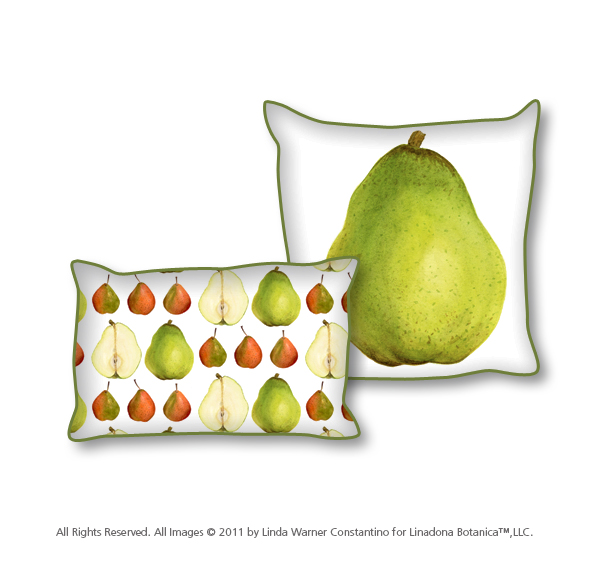
Graphic designers, surface designers, artists, photographers, fine artists and art licensing agents are potential exhibitors at the show. This competitive industry produces images and designs that end up on textiles, linens, giftware, decorative accessories, floor coverings, stationery, paper goods and interior design products.
The Surtex trade show isn’t open to the public, but artists interested in possible future exhibition with the show can request to walk the show (there is a charge for this). Non-exhibitor visitors cannot solicit any business from art buyers or licensees, but can use their time wisely to determine whether the Surtex trade show is a good match for their business. More information about the show is in my interview with show manager Penny Sikalis here.
Two other shows take place at the same time as Surtex – the National Stationery Show, and the International Contemporary Furniture Fair.
~~~~~~~~~~~~~~~~~~~~~~~~~~~~~~~~~~~~~~~~~~~~~~~~~~~~~~~~~~~~~~~~~~~~~~~~~~~~~~~~~~~~~~~~~~~
Don’t Miss This!
Artists & Craftspeople interested in expanding their business through wholesaling:
Want to know how it works and whether you could be successful at wholesaling?
What do gallery and store buyers want, and how do they buy?
Be sure to join Alyson Stanfield, the Art Biz Coach, and me for a teleseminar today, Wednesday, May 16th on How to Wholesale Your Art of Fine Craft.
Even if you cannot join the live call, all participants receive a recording of the discussion, to listen to whenever and as often as you like!
The Art of Wholesaling
May 12th
By Carolyn Edlund
Should you be wholesaling your work? What’s the advantage in doing it, anyway?
Selling wholesale is a proven, successful method available to artists and craftspeople who are trying to build their businesses and make a living. Building a collection of work that can be duplicated and sold wholesale again and again enables artists to establish relationships with galleries and shops that purchase directly from them – and to continue to earn money with repeat business.
When you wholesale your work, your line of products is sold into stores, galleries, museum shops, bookstores, or many other kinds of retailers – at about half the price of retail. The retailers buy your work outright and mark it up to retail prices, then help promote and sell it to their customers who appreciate creative art or craft work.
Wholesaling isn’t for everybody, but if you’re curious, it’s worth finding out whether you can use it as one stream of income for your art business, or even as your full-time business. When artists wholesale, they may attend trade shows, work with sales reps, sell online or sell directly to retailers themselves.
Selling wholesale is very stabilizing to a business. Imagine starting work on a Monday morning in your studio, knowing that everything you will make that week is already sold!
In the twenty years that I owned and ran a ceramic production studio, wholesale was a mainstay of my business. Each week my team and I had about a dozen orders to make and ship to waiting retailers. Our customer base averaged about 150 wholesale accounts at any one time, although on average there was a 20% turnover in accounts annually (this is typical). This made for a very diversified business, with dependable income.
Many artists are good candidates for selling wholesale. They have opportunities to sell into many different markets – home décor and furnishings, accessories, giftware, fashion, stationery, handmade and other categories, many of which have their own trade shows where retailers from all over the country come to find new merchandise to stock their stores.
Wholesaling gives you a chance to work with sales reps also, who are able to take your line into areas of the country where you would never get exposure. Some sell into large accounts where great opportunities may be waiting.
Although lines that are made in production are best for wholesaling, even one-of-a-kind work can be sold wholesale. Artists with production studios that sell wholesale also usually make higher incomes than artists who do not.
Would you like to find out more about the wholesale marketplace and whether it may be a good fit for your business? Please join me in a teleseminar titled How to Wholesale Your Art or Fine Craft, with by Alyson Stanfield, the Art Biz Coach, on Wednesday, May 16th. Participate on the live call, or listen later to the recording.
The Secrets of Retail and Wholesale Selling for Artists
May 4th
By Carolyn Edlund
I’m thrilled to have been asked to partner with Alyson Stanfield of Art Biz Coach fame in presenting two teleseminars this month about the business of art and craft.
These will take place May 9th and May 16th. Join us for each of these hour-long learning sessions by visiting this page on Alyson’s website: “Art Sales for Artists and Craftspeople.”
The first session, taking place May 9th is “Nail Retail Sales.” We will deal with issues that artists have with selling their work and how to improve them.
We will talk about sales techniques, and:
- Why people buy and why you need to know this
- How to overcome objections from customers
- How to ask for the sale
- How to sell more to individual customers
- How to drive repeat business
- What you must never say to a retail prospect
- Why it’s never about money
On May 16th, we will delve into selling your work wholesale, with “How to Wholesale Your Art or Fine Craft.” This is an area that interests many creative entrepreneurs, but they may not understand how it’s done successfully. I sold my work wholesale for twenty years, and was an outside rep calling on retailers for over seven years, and have several different viewpoints on this subject.
There are many important strategies to know about taking advantage of selling wholesale as a way to stabilize and build your business.
Topics include:
- 5 reasons to wholesale your art or fine crafts
- How to wholesale if you make only originals
- How to move from retail to wholesale
- How to price your art for the wholesale market
- How to build relationships with retailers who can sell your work
- How wholesale buyers think and what they need from you
Click Here to get more info on these two teleseminar sessions! If you can participate on the call itself, you can get the recording and listen whenever you like.
How Artists Can Make an Effective Press Kit
Feb 28th
By Carolyn Edlund
Don’t Miss this Perfect Opportunity to get Attention from the Press!
I recently attended a major trade show and checked out the press room. Press kits (also called media kits) were available from some of the exhibitors in the press area, but the vast majority of exhibitors did not offer them. I’d say only about 10% of exhibitors had bothered to put them together.
This isn’t unusual – it happens at most shows. Many artists are simply not participating in what could be phenomenal publicity for them – and that is your big opportunity. Yes, I know there are a million things to do when getting ready for a trade show, but you are paying good money to get there. Make the most of it by putting together your press kit.
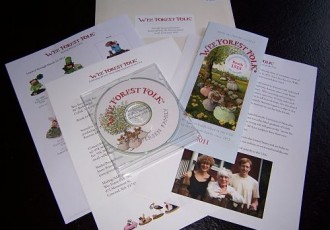
What is a press kit? It’s a packaged set of promotional materials about you and your business that is distributed to members of the media in order to get exposure and publicity. You can get lots of extra mileage out of your show by using press kits to gain exposure through interviews, mentions and images in publications, blogs, television or other media.
It’s easy to make one using a 9″ x 12″ folder with pockets inside that can easily hold a number of items. You might want to put a label on the front cover with your logo or company name.
Your press kit may include:
- Your Contact Information – on every piece in your kit.
- Your Booth Number at the show.
- A short cover letter (called a pitch letter) introducing you and basically telling the press why they should care about you and why they should write about you.
- Copies of other recent press coverage you have gotten – or a list of publications where you have gotten press coverage.
- Your brochure.
- Your photo. This could be a headshot or perhaps a photo of you working in the studio.
- An interesting “bio” (this is not your CV). Just a few paragraphs written in a friendly, approachable style that gives interesting information about yourself and your work. Tell your story.
- Photos of your portfolio or your production line. Make sure these are gorgeous shots, which would look great in a magazine spread.
- Terms, prices and other pertinent information about your work.
- A CD or DVD of your portfolio, an interview with you, or a video of you working in your studio.
- Your Business Card (these can easily fit into slots provided in most pocket folders)
- A sheet which gives story ideas for the press. Categorize them – for example, “Recycled Art,” “Wedding Gifts,” “Childrens Bedroom Décor Ideas” or any other niches that your work falls into. Write a paragraph under each category telling the press what you have to offer when they write stories about those topics.
Make it easy for press to find you, use your images, and write stories about you – and they will. Reporters and bloggers are always looking for story material. When you have done a lot of the work for them, it makes it almost effortless for them to include you in their article and make their deadline.
Do you have a press kit? What do you include? What type of response have you gotten?
Want to Rock Your Art Business This Year? Start with Your Collection
Jan 2nd
By Carolyn Edlund
Artists need a cohesive, signature body of work. Create a great collection for your targeted audience.
Artists often look for ways to increase business, such as better marketing techniques, creating more income streams, or licensing their work. Another major factor that can affect your bottom line is your product line – and thoughtful development of it.
As you consider how to grow your body of work, take a look at the big picture. Are you selling one-of-a-kind pieces only? Is your price spread limited, restricting your market? Do you want to break out this year, or even explode your business by tapping into ways of selling you haven’t tried before?
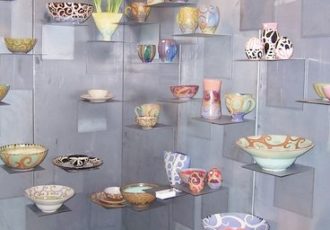
Many readers have their illustrations and artwork on products such as greeting cards, prints, handpainted clothing, and other retail items which can be produced in volume. If you can produce in multiples, such as pottery, jewelry, clothing or other handcrafted line, prints of your work, or using your art on self-produced products, you open yourself to the world of wholesaling. If this is your choice, make sure to crunch the numbers and price your work for profit at wholesale.
Selling wholesale not only creates a huge boost in volume, but helps stabilize your business as well. There is nothing like having orders from a repeat customer base of retailers to keep regular income flowing through the door of your studio year round.
In my own experience running a production ceramic studio for twenty years, I had about 150 retail stores at any given time as active wholesale customers. Although each account was different in the frequency and volume of their orders (and there was an expected turnover of about 20% each year), it brought enormous stability, which allowed me to hire assistants and make projections each year based on a known quantity.
An added bonus is that as you develop your own book of business, you will be able to show receivables and gain the credibility to successfully apply for a business loan to expand your operation if you wish. Bankers love hard numbers, and most businesses have this kind of data. You will too.
Back to focusing on developing your product line. Plan carefully so that as you ramp up to create a new, cohesive and exciting line for your business, you will be able to:
- Open new and broader markets for your work
- Spread your price points to appeal to more customers’ budgets
- Enhance your brand
- Increase repeat sales
- Put yourself in a position to cross-sell more of your line
- Rejuvenate your business by adding lots of exciting new items
As you consider new directions for your line, make sure you are designing what you enjoy doing and would be happy to stay with. After you come up with a core look for a collection, start branching off into more related products. Necklaces need earrings and bracelets to match – and pins, hair ornaments, even ankle bracelets. Tabletop items look great in groupings. Pottery is a natural for a collection. Working in themes offers endless opportunities for collections.
If you design more than one collection, you may want to make one higher-end and one with lower prices, to catch a wider audience. Name your collections. Give them life, make them memorable. Go into your design process knowing who your target customer is, what they buy and why your work will appeal to them.
Now, let’s increase the ticket. Think pairs or sets. If you can sell several of a product rather than one because they are in a set, each sale jumps immensely. Artwork in themes should be created in series to be displayed together for a bigger ticket price. Why would you sell one kitchen-related print when you can create a set of four to be hung together? You can stress this point by not offering them as singles. And if you license your images, all the better. Art publishers love artwork in a tightly cohesive series. They know and value the power of collections.
Collections make a statement. They look good when displayed. They create a buzz. Rockstar designers know this. Start looking at the websites of artists and craftspeople you know who are successful. They all started with good ideas and expanded on their signature styles.
What designers do you know with a well-made, popular collection? What inspires you to create your own?
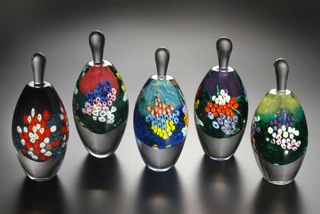
See more of Shawn Messenger's glass art by visiting her website at www.shawnmessenger.com

Print
Digg
StumbleUpon
del.icio.us
Facebook
Twitter
Google Bookmarks
Reddit
email
FriendFeed
LinkedIn
Tumblr


Featured Artist Julia Hacker