A Site for Emerging Artists
Posts tagged artists
Artsy Shark Goes Threadless
Jun 3rd
By Carolyn Edlund
What’s the inside scoop on the fun, hip indie t-shirt company Threadless? They’re always recruiting artists to submit original designs that will look fabulous on t-shirts and other clothing to sell to their huge audience of shoppers. Yes, they want your original idea, but clearly state, “We’re talking an idea so amazing that your eyeballs may explode if you stare loo long!”
Artsy Shark went behind the scenes to find out exactly how this process works, and to discover if there is a secret to having your design chosen and land the $2,000 payout when it becomes one of the select handful of products for sale on their website. Via conference call with Threadless Community Director Mimi Henderlong and Artist Coordinator Rachel Gottesman (who gives thumbs up or down on initial submissions), it became clear that Threadless has taken a cool idea and turned it into a fanatical community of artists who support one another in the pursuit of saleable art.
Describing the submission process, Rachel explains that every day she receives about 200-250 designs from artists all over the world. Users download a submission kit from the Threadless site, and work with a program such as Adobe Illustrator or Photoshop to put their art on a template, shown either flat or on a model. There are guidelines however, and when they aren’t met, Rachel sends the submission back as “declined,” to be fixed and resubmitted. Rachel’s a stickler. No inappropriate or copyrighted designs, images too large or too fuzzy will get through. Lesson? Follow. The. Directions.
If you’re not confident or just want input, you can have your design critiqued by your peers first. When it is accepted (Yay!) it goes up on Threadless for seven days, put to a vote on a scale fro 0 to 5 from all visitors. This is where lobbying all your friends, contacts and even strangers can help get your unique design voted in as a crowd favorite. So post it on your Facebook page, and send emails and tweets to bump up your score – that’s encouraged. Warning: Voting on designs can be an addictive activity, resulting in your getting nothing else accomplished. So vote for your favorites, and then get back to work!
At the end of the week, your score gets averaged and the staff at Threadless (you can see them on the site – they’re the t-shirt models) get to pick their favorites from the best of the best. Then onto a final decision-making team who determines the winners. Voting scores and comments are very influential, but the mysterious process by which the finalists are chosen is the secret behind the success of the designs that make it to the marketplace, at about $20 retail per shirt (or as a hoodie, or childrens tee or onesie.) Each week about ten new designs are debuted for sale from previous submissions.
Winners are rewarded well for their hard work, receiving:
- $2,000 in cash
- $500 Threadless Gift Certificate (can be redeemed for $200 cash)
- $500 in cash each time your design is reprinted
How cool is that? Even if you don’t get your design chosen, you will most likely end up buying at least half a dozen t-shirt that you can’t live without, thereby living up to the Threadless slogan “Nude No More.”
Helping Artists Find Balance/Interview with Max Shapey LCSW
Aug 9th
By Carolyn Edlund
Are you finding it difficult to get motivated and follow through with artwork you have planned? Are you procrastinating or getting overwhelmed with the process or your inability to complete tasks?
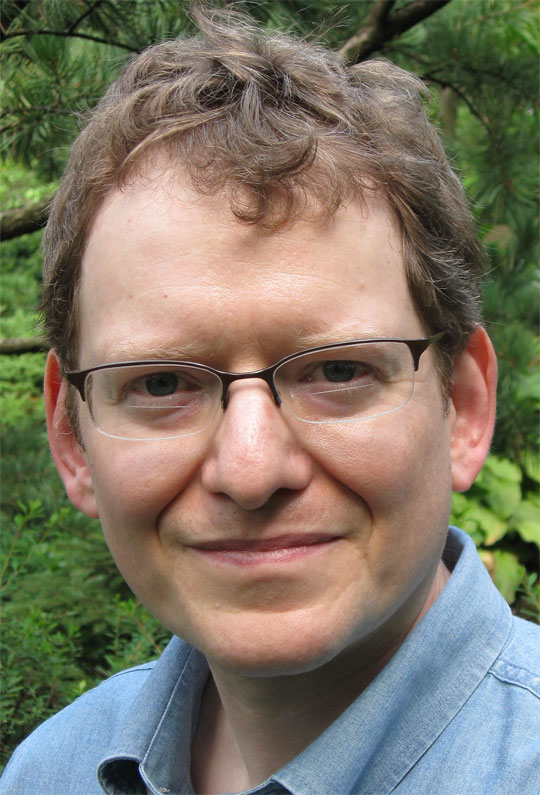
Artsy Shark spoke recently with licensed clinical social worker and psychotherapist Max Shapey about his insights into some of the emotional issues holding artists back. Growing up in an artistic family, he has spent much of his life surrounded by creatives, and is very familiar with this subject. Although he practices hypnosis in his practice in Evanston, Illinois, he says that this technique is normally used for anxiety or breaking habits, and that talk therapy often is best to help artists find balance in their lives.
Max cites the example of a highly successful visual artist he worked with who hated every painting that he created. The artist had become well-known for his particular niche, and was pressured by his gallery into cranking out the same type of work. He resented this and wished to work in a more soulful style, but felt obligated to continue to paint as his gallery requested (which was producing income). The solution? Choosing to allot some of the artist’s time – protected time – to working on his own interests. He gave himself permission to set aside a certain portion of time for himself and his artistic growth and vision.
Sometimes artists run into the problem of not being able to finish a work, Max says. It could be a fear of having to do something further with the finished art, taking an action such as entering it into a gallery show, selling it, or moving onto another activity which might be very stressful. Emotional conflicts such as this can cause a self-fulfilled prophecy of “stuckness” or failure.
We asked Max how artists can deal with the blocks that prevent them from working. Here are some of his suggestions:
- Instead of obsessing about why you can’t get started, simply do it. Put pen to paper or brush to canvas to get yourself physically “jump-started”. There is a feedback between the object being created and the process which may help you break through the barrier.
- Don’t work with a goal in mind. Simply sketch, or work with your medium. Allow yourself to wander creatively without judgment about what you are making.
- Examine your habits in the studio. Are you working when you have sufficient time, or are you tired by the time you get started? Are other job obligations keeping you from being fresh when you get ready to start? Schedule time in your studio when you have the energy to be focused and productive.
- Give yourself permission to work in small bites until you feel emotionally ready to work at more length. If that yawning canvas is overwhelming you, bring your task at hand down to a manageable level. Work for thirty minutes or an hour, and then make a decision – do you want to continue working or take a break?
Sometimes other reasons, such as emotional issues, depression, relationship problems, identity issues and sense of self, anxiety, phase of life, or other worries and concerns get in the way of artists being able to move forward and fulfill their potential. A professional can be very helpful in working through life situations and getting yourself back on track creatively. Check www.maxshapey.com for more information about emotional issues, depression and available treatment. Take care of yourself – stay well, creative and motivated!
Artists, Sensitivity and Confidence Interview with Douglas Eby
Jul 22nd
By Carolyn Edlund
Douglas Eby, M.A./Psychology is a researcher and writer, and founder of TalentDevelop.com. His many years of study in creativity, giftedness and mental health issues originated from self-exploration into his own development. TalentDevelop offers diverse resources, written by authors who are experts in their fields. Emerging artists and other creatives will find this wonderful site one to bookmark and follow.
AS: Many artists, even seasoned professionals, struggle with self-regard
and confidence. How does our culture encourage this?
DE: For centuries, people have enjoyed performances and artwork, while
holding attitudes that artists were “vagabonds” or “disreputable.”
And still, young people may get messages about choosing a “real” career
versus being an artist.
There are many examples in culture of attitudes about artists being on
the fringe, or emotionally unstable. Just think about how musicians,
actors and visual artists are often depicted in movies and the news.
Writer Brenda Ueland once wrote she thought it is our materialism that
makes us feel, “What is the use of writing, painting, etc. unless one
has an audience or gets paid for it.”
But, she added, Van Gogh “loved something, the sky, say. He wanted to
show human beings how beautiful the sky was. So he painted it for them.
And that was all there was to it.”
So being an artist as a vocation can include pressure to make it a
financial success, and if you don’t achieve that success quickly, it can
be hard to maintain your positive self-regard.
Arts and entertainment careers can flourish with fame – but if the
acclaim isn’t there, an artist can deeply question their identity and
the validity of their passion as a way to make a living.
AS: Could you describe how artists can get past these barriers?
DE: One of the keys to developing our talents is believing in our
abilities and competence, regardless of public recognition.
The creators of The Passion Test point out, “There are only three things
that prevent anyone from living their passions: false beliefs, false
concepts and false ideas.”
See my post: Self-limiting beliefs and developing your talents,
False or distorting ideas are all around us and can affect our choices,
confidence and esteem: like the notion that the arts are a “soft” or
“secondary” career – or that if you choose to be an artist, you must be
“flaky.”
So, question any concepts or beliefs about being an artist. Endless
numbers of people have disregarded the biased ideas of their family and
culture to make successful careers in the arts.
It can help to read biographies or watch interviews with artists, to
learn more about ideas and attitudes that work.
AS: The common myth about the crazy artist may actually describe a
“highly sensitive person”. What does this term mean? How does the highly
sensitive person feel?
DE: Being a highly sensitive person is a trait of 15 to 20 percent of
people, but it seems to be much more common among artists.
It means you may be unusually sensitive to noise, pain, chemicals,
caffeine, music, visual art, other people’s emotions, or other input.
It can also relate to being introverted – which is not a socially
“approved” trait in this country, though it is in others.
A CNN article on “sensory processing sensitivity” reports that people
with this trait “tended to have more brain activity in the high-order
visual processing regions” – so it can help your skills as a visual artist.
Read more in my post Better at noticing subtle details.
In her article Highly Sensitive Personality and Creativity, therapist Lisa A. Riley writes, “Throughout my practice, I have encountered a connection between highly sensitive people and their own creative impulses.”
The “crazy” aspect is mostly other people not understanding it and being
critical: “Why are you so sensitive?” – which can lead to feeling
“wrong” or “disordered” for having a “finely tuned nervous system,” as
some coaches and psychologists describe it.
AS: Could you suggest resources to help cope with this condition, or
find out more about self-help methods?
DE: First, it helps to see that it is not a “condition” in the sense of a
“disorder,” but rather a valuable personality trait that may be one of
the reasons you are creative.
Read more about it in books such as Dr. Elaine Aron’s book The Highly
Sensitive Person, and on my Highly Sensitive site.
If you are highly sensitive, to work at your best and be most creative,
you need to take care you don’t drain your energy from being overwhelmed.
There are books about that, and a number of coaches.
Jenna Avery, for example, explains, “Coaching focuses on helping us
claim the truth of who we are, steep in self-acceptance and
acknowledgement, nurture our own well-being, and celebrate the
expression of our gifts and true selves in the world.”
See my page of High sensitivity related sites for links to her site (and my audio interview with her) – plus a number of other coaches and information sites.
Featured Artist Jake Remington
Jun 4th
The JUNK: a conglomerate of found, discarded materials assembled with nails, glue, tape, and staples…patchwork mistaken for framework. Materials derived from our throwaway culture reflecting our rapid pace of consumption, assembled in such a way that suggests it will only hold temporarily.
The FUME: household chemicals, spraypaint, glue, latex, acrylic, and oil. The fume we all need. Whether its drink, smoke, religion, TV, sex, drugs, working, selling, buying, hurting, or loving; we consume it for the high, for the escape, and it gets us through the day.
These paintings are about consumption and excess. Personal, national, and global. They are about death. And living. Emptiness and fulfillment. The fragile. The delicate. The brutish. The savage. Body and mind. Pissing, shitting, fucking, and loving. They are about laughing and they are about enjoying the view while we can.
The heroes, monsters, and villains in these paintings are not unlike us. They exist in a world they struggle to control with color, line, and shape melting into one overwhelming environment. Abundant forms of communication engulf them but rarely is true communication conveyed between them. With no regulations, no guidance and no communication these characters are running out of time and can only rely on JUNKANDFUME to get them by.
These paintings are looking for a gut reaction. An instinctual, emotional or physical, response that rises to the surface of the viewer. Something to make them pause, take a second look, and think.
Goals
Not to rely on old solutions for old problems. Always keep moving. To one day (soon) not have a boss. To not have to wake up early to chase someone elses dream. Create honest work constantly.
Working on
Dealing with the way the world works. Trying not to ignore that reality but instead manipulate it.
Currently contributing to a group show at the CCCP gallery in Williamsburg, Brooklyn along with a few more group shows around Brooklyn and LES. Looking for more opportunity.
Fine Art & Styrofoam/Interview with Cheeming Boey
Feb 14th
By Carolyn Edlund
Cheeming Boey has gotten a lot of press about his choice of medium – Sharpie pen on styrofoam cups. He spoke with us about how he got started, and his future plans. You can view quite an extensive collection of his incredible work on his website.
AS: One of the images you use in your styrofoam cup art is your interpretation of Hokusai’s “The Great Wave”. It’s such an iconic image, and you combined it with an unexpected, funky and non-traditional art medium. Are you making a statement about art or just having fun?
CB: Hokusai’s works inspired me greatly when I was a kid. Later on , his lineworks in The Great Wave also influenced the way I would draw mine.
The way the waves look is very different - mine feeling more spaghetti-like, but his waves are what I look at when I draw mine. I don’t believe art has to be limited to the canvas. Some of my best ideas start off on napkins at a bar or restaurant. I like art when it’s spontaneous. I believe you can make good out of anything, even the humble 4C foam cup that has gotten so much negative rap over the years.
AS: Lots of artists struggle with “taking the leap” and finding their own style and identity. Yours happened accidentally. Can you tell us how you got started?
CB: I think everyone’s drawn on cups, or scribbled. I found some of my drawings on my first few cups interesting, and I kept them. A co-worker
saw me drawing one day and asked what I was going to do with all the cups cluttering around my workstation. I said, “They’re kinda nice, maybe I can sell them one day.”
I guess it got started when he said, “No one’s going to buy that crap.”
Then I made it a mission to prove him wrong.
AS: Your artwork is selling for up to $480 each, and has been popular. What feedback do you get as to why people are collecting your work?
CB: The reaction I get from people is really mixed. Some will never pay the price for what they consider to be trash. I can see why. But just because it is labeled “disposable” doesn’t mean it has to be. Most people
who buy my work believe in what is drawn on it, and not what I drew on. But they’ve also asked me if I do work on flat canvases. To me, curved surfaces provide so much more challenge. Just the process of trying not to mess up because I am drawing directly with a sharpie on a curved surface makes everything so much more exciting.
AS: Do you have plans to do anything new with your work in the future?
CB: I’m hoping to get my art onto cup noodle packaging sometime. Right now, I am more focused on trying to get a book out about my day to day life. Currently you can read about my amazing everyday adventures on www.iamboey.com. I am going to try to get that published with other materials I have been working on.
AS: Which of your cups is your personal favorite?
CB: I don’t have a personal favorite, because they all mean something in
one way or another to me. Perhaps “pew pew pew” because it reminds me of having dinner back home with my family when I was a kid. Now that my sister and I have grown up and moved away from home, it’s hard to find time to have dinners together. I miss that.


Print
Digg
StumbleUpon
del.icio.us
Facebook
Twitter
Google Bookmarks
Reddit
email
FriendFeed
LinkedIn
Tumblr


Featured Artist Leah Jay