A Site for Emerging Artists
Posts tagged Greeting cards
Top 10 Articles on Artsy Shark for 2011
Dec 21st
By Carolyn Edlund
This year’s countdown of the ten most read and shared articles on Artsy Shark.
10. Making Art and Making a Living - Do you have to support yourself through your art to be an “artist?” Or does the financial pressure hurt your creative growth and your sanity?
9. “You’ll Never Make a Living as an Artist” - Are you surrounding yourself with supporters, or naysayers? Who is holding you back? Your family, your friends? Or is it you?
8. Matching Artists with Corporate Buyers - Joyce Creighton’s fascinating story of how she is connecting artists whose work is appropriate for corporate settings with clients looking for their work.
7. How to Make Your Customers Fall in Love with You - Want more business and repeat customers? That’s right – spread the love.
6. Do You Want to be a Childrens Book Illustrator? - Cherish Flieder discusses the steps in childrens book illustration, and how to get started in the business.
5. Creative Marketing for Artists - Think outside the box when it comes to promoting your work. Here’s some examples of how other artists did it.
4. 6 Ways to Improve Your Greeting Card Sales - Is your line balanced? Is it big enough? How often should you update? The basics on what you must do to have a successful greeting card business.
3. What’s Wrong with Your Art Website? – Artsy Shark asked the experts for their pet peeves when visiting art websites. Are you guilty of any of these sins?
2. A Guide to Pricing Your Artwork – Professor, TED speaker and entrepreneur Karen Atkinson gives great advice for artists on this perplexing but essential topic.
1. Are Your Prices Unrealistic? – Are your prices too high? Too low? How your competition affects your perspective. Lots of comments and opinions about pricing.
Interview with Greeting Card Designer Kate Harper
Oct 9th
Kate Harper is a well-known greeting card designer, with lots of experience and a wonderful blog for card entrepreneurs. She speaks about how her business developed and what she sees next for the industry.
AS: Kate, you made a major adjustment to your greeting card line when working with a helpful sales rep. What happened and what did you learn?
KH: I’ve been through several adjustments, but in the beginning one rep recommended I make my cards brighter colors and to think about what the message communicates when you look at the picture, even before you read the words. Reps also gave me feedback from the stores such as “people don’t get this joke” or “no one likes that card because it’s green” or “even though the sentiment is true, it’s depressing.”
AS: Could you talk a little about how transitioning from making your own handmade cards to licensing has changed your business and your life.
KH: It was a difficult decision to leave manufacturing because I had several people who depended on me for an income, but my business was growing to the point that I would have to relocate the studio and hire more staff and I really didn’t want to do that. For me, it was a lifestyle choice.
For fifteen years I ran a full time card publishing business, servicing thousands of stores and worked with over 100 sales reps. I felt lucky and blessed to be able to create designs and sell them and make a living from it, but I also found my life revolved more and more around packing and shipping cards, and very little to do with art.
Then I took a class with Cheryl Phelps on Art Licensing and my mouth fell open and it has been open ever since. I never realized art licensing even existed.
Life is completely different now, since I can do art full time and I have a lot more free time. I know some people say getting into art licensing is difficult, but I didn’t experience it that way. Perhaps because when I approach a company I bring a lot more to the table than just art skills. I bring 2,000 of my former accounts, sales statistics from my business and a background in the gift industry. I also understand what is involved in manufacturing a product, so it’s easy for me to put myself in the shoes of another company when they come up against challenges or misprint something. I try not to be too picky, because I know how incredibly difficult it is to match colors and make affordable products.
AS: Saleability is key to having a successful card line. What do you consider the most important factors in making a line saleable?
KH: The measuring stick I always use when evaluating my own cards is “Would I pull money out of my wallet right now and buy this card?” I also visualize a friend and imagine receiving or sending this card to her and asking myself: “How does this feel to send to her? Is it too weird? Is it condescending or unintentionally insulting?” Also, my silent motto to myself is “If you can make people laugh, you’ve already sold your product.”
I do abide with the greeting card standards that the image is the most important, because it causes the customer to pick up the card on the rack. Therefore you’ve got to have a strong image that evokes an emotional response.

AS: What do you see as the biggest challenge for greeting card entrepreneurs today?
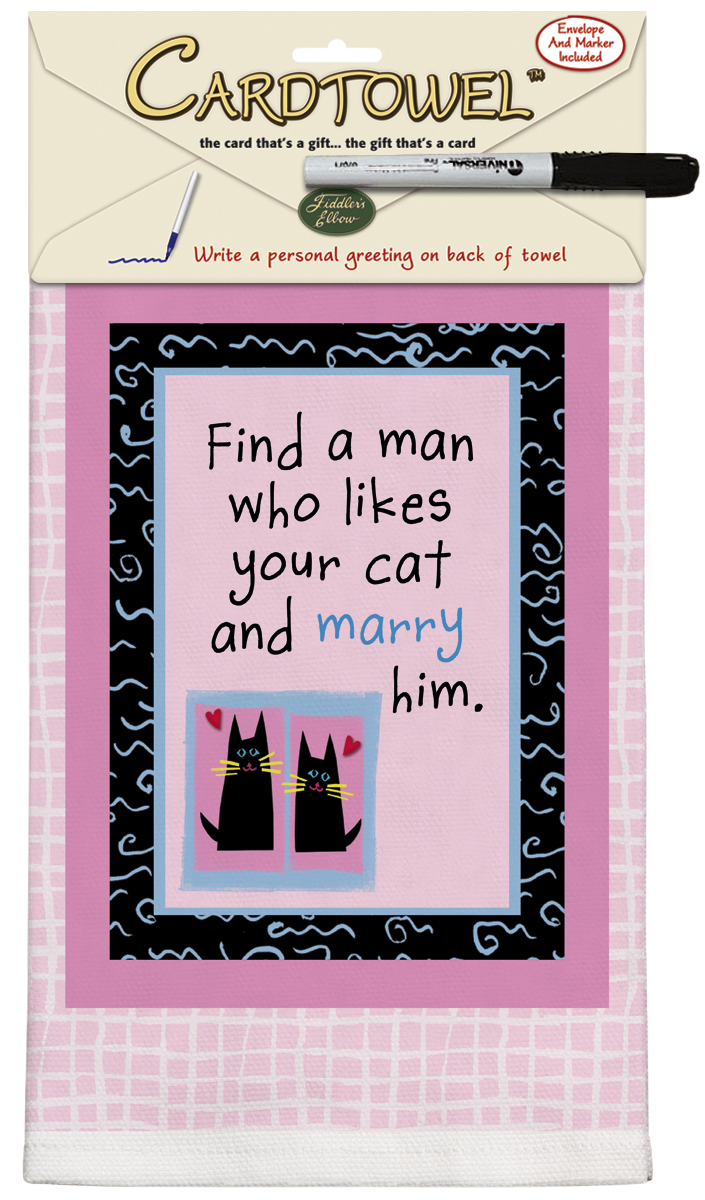
KH: The card industry is suffering, no one can deny that. But I also have been working with companies who are redefining the meaning of what a greeting card is, such as Fiddler’s Elbow. I recently worked with them to develop a line of “Card Towels” – towels than can be sent as greeting cards.
I also am working with a second company on a similar concept (but different product) where the traditional me-to-you relationship is being adapted to a gift item in place of a greeting card. I see a strong future in the explosion of apps and ebooks and redefining what a greeting card is, in those contexts.
For example, on my own, I’ve been working on some concepts for Greeting Cards for the Kindle, I call “Kindle Cards.” My idea is to develop cards that can be sent to a friend’s Kindle, which is a completely different (and more positive) experience than receiving an e-card in an email. If you use a Kindle, you’ll understand why.
The good news, from my observation, is that the Handmade and alternative card business is doing OK and I’ve had a rep confirm this recently. I also have a friend whose $6.00 greeting cards keep selling out in a local store.
This year, when I went to the San Francisco Renegade Crafts Fair, people were standing in line to buy funky cards and gifts. This tells me that people still love to touch and send things. We just need to meet them in the places they want to be. That’s why I think trade shows should redefine what they are also.
A greeting card sales rep I know here locally whom I worked with for over a decade has a great idea for moving gift shows into a new generation, which is to change them to a format like the Renegade fair.
If you allow designers in at more affordable prices, in a funkier, unsterile modern setting, you are going to attract more interesting vendors, products, younger buyers and more buyers overall. Also, if you have this type of show in a variety of metro areas, they can start to reflect individual design styles from different parts of the country.
How to Succeed in the Changing Marketplace
Oct 1st
Do you need sales reps? Or a new strategy? An interview with Meryl Hooker, internationally recognized writer, speaker and consultant. With nearly 25 years in sales, she brings real life experience, skill and expertise to sales warriors and companies alike.
AS: What do you see as the biggest problem small entrepreneurs have in getting sales representation?
MH: The single biggest challenge facing new and young greeting card and gift companies today is the shortage of available competent sales reps. Period. At least that’s what they think their problem is. In reality, there is a whole lot they can and should be doing to get the attention of sales reps.
Sales reps chase money. And when a company builds a sellable line that retailers are interested in, the right reps will come.
AS: When reps look for lines, what is the most attractive thing to them?
MH: I advise my clients (who are sales reps) that you need lines which fit in with your customer base and the other lines that you represent. For example, I carved a niche for myself in the weird humor market. If someone called me with a line that featured fairies and angels, it didn’t matter how good the line was – it didn’t make sense for my business, or the stores I called on.
You must also have a line that is adequately developed. For example, if you have a greeting card line, you need a minimum of 36-48 cards, enough to fill a rack. If you have seven cards, you don’t have a greeting card company, you have an art collection.
Reps are not in the business of helping you develop your company. They are in the business of selling product to retail stores. As a manufacturer, card or gift company, it’s your responsibility to make sure that there is something to sell.
AS: Would you recommend that someone with a gift line search for companies producing compatible lines, and approach their reps?
MH: Five years ago, I would have said yes. But the reality is that the landscape has shrunken considerably. The new economic landscape has killed a lot of retailers, and a lot of manufacturers. I believe the customer gets the final vote, and reps are going to pick up lines they can sell. If you are serious about growing a sales rep force, you go for the most appropriate people and let them worry about the competition.
AS: How do you see reps changing their approach to making sales to their retailers?
MH: The biggest frustration that I hear from the sales reps that I mentor, is that the old strategies aren’t working anymore. I will go on record as saying that anybody who is still making cold calls is wasting their time. There are so many new tools available that the cold call is an antiquated way to sell in the gift industry at this level.
AS: Are reps more engaged in social media, getting online with Facebook and communicating in different ways, such as Skype,etc? Do you see them using more innovative ways to sell?
MH: People who are being successful, yes. The problem is that the majority of reps are still on AOL. They don’t use social media or have web pages. Have you ever tried to Google a rep? They’re not on there, nor are they taking advantage of tools that actually make the selling process easier. They are still dialing for dollars, mailing catalogs. They are not keeping up with technology. In the end, if that trend continues, I don’t see it going well. People who are embracing it are seeing results.
When I was developing my rep business, customers were sending me orders on Facebook, posting appointment requests on my wall. There are ways sales reps – and greeting card and gift companies more importantly – can position themselves in social media platforms to interact with customers, sharing content that they care about. The conversation is already happening. Are you participating in it?
This does not require you to have sales reps. Post your new designs, or a link to your catalog, to your website. Talk about all the cool stuff you are working on. Provide specials and promotions just for your Facebook customers, with special codes. It’s free. It’s the same principles of selling, but updated. The fact is that there is such a scarcity of competent and effective sales reps right now that the small companies that will survive are the ones that figure out how to sell their line themselves.
It’s the new marketplace. Social media is not going anywhere. When you’ve got companies as diverse as Amazon and Coca Cola, and your corner liquor store, who are all signing up on the same platform, it’s not rocket science to know that it’s worth paying attention to. Facebook may not be the final destination. I hope there is some kid in a dorm room right now inventing something even more amazing
AS: So you feel that companies can be just as effective without sales reps.
MH: Quite frankly, I don’t think a company has any business working with sales reps for the first two years. It’s a disservice to the rep, and to the company. It pretty much takes you two years to figure out what the hell you’re doing.
AS: Would you say the problem reps have in embracing change is due to the average age of typical reps out there?
MH: Absolutely. There are some younger people still carving out a career as a sales rep in this industry. But what I tell businesses that come to me saying “I need a rep”, I respond, “No, you need to learn to sell your line.”
There is unprecedented change going on the industry. Selling is not a dirty word – it’s about doing business with your friends. If you are an artist of any type and asking people for money for your product, you are in sales. It doesn’t matter whether you do one-of-a-kind paintings or whether you have a line of 150 greeting cards. That commercial exchange equals selling. It is so important not to be afraid of that process. It can be intimidating. Rejection is hard.
Understand your market. Don’t go too deep too fast. You may have a terrific first run on your orders, but if nobody reorders, who cares?
AS: That’s true, it’s not about the initial sale. It’s all about repeat orders – that’s where your bread and butter is.
MH: Exactly. But what’s happening right now is a tremendous resistance to anything that is not proven, or anything that is experimental. That is just reality.
AS: Any other thoughts on how small entrepreneurs can become successful in this climate?
MH: Know that you don’t have to do this alone. There are so many resources available, not only through discussion groups on LinkedIn, but also through enlisting the help of industry experts. You can flush $5,000 trying to figure it out on your own, or you can invest a percentage of that working with somebody who can actually cut your learning curve in half and help you start making money sooner. You don’t have to fake it. It behooves you to not do that. Seek out help and ask questions.
Join Meryl for an event on October 10, 2011 at 11:00 a.m. Eastern time. This concentrated teleclass session discusses effective ways to utilize social media to identify, make real connections and build relationships with your active and prospective customers.
Consultation Case Study: Improving a Greeting Card Line to Increase Sales
Sep 7th
By Carolyn Edlund
Is This Greeting Card Line Ready for Retail?
In a recent consultation appointment, I worked with an artist who designed a line of greeting cards, and has a wholesale catalog in process. She was looking for help in evaluating her line as a whole, and wanted specific advice about making necessary changes, so that her products would be as saleable as possible.
We discussed sentiment categories, sizes, pricing, stock and envelope choices, cellophane, barcodes, terms, minimums, headers, display options, trade shows, related products, and marketing strategy.
Evaluating Categories
One of the most important factors in determining the success of a card line is balance. When a card artist schedules a consultation, we always start by evaluating the percentages of their line that fall into different categories, to be sure they are properly balanced for the marketplace.
We took a look at the percentage of her line greeted as Birthday, and decided to increase it by changing the greetings on some non-Birthday cards. If Birthday is not a full 50% of the line, it does not reflect market demand. Then we reviewed other categories, such as Friendship, Anniversary, Thank You, Sympathy, New Baby, etc. If these sentiment categories are not in the right percentages, sales suffer there as well.
Blank Cards
I found that this artist had too many blank cards in her line, and was unsure of which ones to keep. We discussed how to choose the cards in her line that would work best as blanks.
Many artists produce blank cards only, which is a pet peeve of mine. If you are willing to turn away 90% of American buyers (who are looking for cards greeted on the inside), then go ahead and produce your blank line. Store buyers have little interest in looking at “yet another line of blanks,” no matter how pretty or appealing.
Consumer demand determines what sells, and you need to supply what they want in order to be successful. I give a pass on the issue of blank cards to artists primarily creating paintings or drawings who just want to sell packaged boxes of blank notecards as a sideline. End of rant.
Fine Tuning the Line
Another crucial process in getting a line into stellar shape is to review each individual card. The image on the card grabs the customer’s attention, but the message will sell it. Is the message clear and complete? Does it work? Take a look at your own line, and evaluate each one. Ask yourself, “Who would buy this card and why? Who would they send it to?” If you don’t know, make some changes.
My client’s line needed some adjusting, particularly because she had some categories which aren’t popular enough to include in a small collection. Several of them were in the “Bon Voyage” category, which accounts for about .0001% of card sales in my estimation. We worked together to change the greetings and put them in more popular categories rather than let them languish as unsold inventory.
What to Toss
Other categories generally not worth including (unless you have a large line or specialty market) are New Home, Good Luck, Retirement, Bridal Shower, Baby Shower, I’m Sorry, and Pet Sympathy. Seasonal (holiday) cards of all types and cards for relatives should also not be included in small card lines. Some people may take exception to this, citing their Christmas card collection. Include that holiday if you must, but be aware that returns/exchanges and other issues may surface with your retailers.
Pricing
My client felt unsure about her pricepoint, and also whether she should be printing the retail price on her card. We adjusted the retail price for her, and I strongly suggested the price be printed on each card. I do not know of a single retailer who has the time or interest to stick prices on greeting cards.
Artists should become acquainted with average market prices for their type of product. Don’t try to reinvent the wheel on this with an unusual retail pricepoint. For example, $2.17 is not a card price. Prices typically end with .25, .49, .50, .75, .95 or .99, and the public is accustomed to this.
Goals
A card line consultation and review encompasses many topics. We address the line as a whole, and every aspect of the processed involved in selling it – making it ready for retail.
When evaluating your own card line, work towards accomplishing these two goals:
- Adjust the line to make it easier and more appealing for the customer to choose your cards over your competition
- Remove any barriers to the sales process, both at wholesale and retail
In this competitive industry, small details can make a huge difference. Does your card line measure up?
Greeting Card Entrepreneurs Take Advantage of Niche Marketing
Aug 10th
By Carolyn Edlund
Greeting card designer Swati Bhagat and marketing director Faith Featherstone make a potent team of entrepreneurs in their home town of Toronto, Canada. Although the greeting cards are fairly new, they have used strategies to create a buzz around their Artistry Card line to build a reputation and sell wholesale to retail establishments.
Billed as a “Canadian stationery company that sells socially responsible, eco-friendly, superior quality greeting cards and stationery paper goods,” they have quite a few ways of expressing that commitment.
Some of the ways Artistry Cards is walking the walk:
- Using post-consumer recycled paper to produce cards and envelopes
- Biodegradable cellophane on each card
- Orders shipped in 100% recycled cardboard boxes
- 5% of sales donated to Kiva, a micro-loan project assisting entrepreneurs in developing countries
- Recycle symbol incorporated into all designs in their Being Green line
What’s been accomplished? Noticed for her great designs and eco-conscious approach, Swati landed a front page interview in the Entrepreneur section of Canada’s National Post. A large Canadian retailer has expressed interest, and is working on orders with Artistry. They plan to bundle cards together with twine for a more natural look, and market them with men’s products.
Faith notes, “Artistry Cards is all about nature, from the paper we print to the ideas.” Their line incorporates Canadian themed cards such as wildlife charmingly depicted in plaid silhouettes, Woodland Creatures (in woodgrain, of course) and Flora and Fauna notebook sets.
Staying on topic in their chosen niche creates a tight, focused body of work which has become a signature look for the company. This focus, and their earth-friendly message, makes it easy to market their concept to like-minded vendors who embrace the popularity of recycled, reused and waste-free products.
Marketing is a top priority for the team, with Faith spending a lot of time producing press releases, approaching publications and blogs for publicity, and using social media. Her message promotes the line as a “guilt-free alternative to conventional paper products.” She cross-promotes their wholesale clients by mentioning them in articles about the card line.
Having their own storefront has been a great way to test-market new products and control the printing process to get perfect colors and assure a quality product. This also helps drive local press exposure. Artistry Cards is owned by Pixel Print, which Swati established in 2006. The store is located at 1319 Dundas Street West in Toronto.
Print
Digg
StumbleUpon
del.icio.us
Facebook
Twitter
Google Bookmarks
Reddit
email
FriendFeed
LinkedIn
Tumblr


Featured Artist Leah Jay