A Site for Emerging Artists
Posts tagged licensing
A Day in the Life of an Artist’s Agent
Jan 14th
By Carolyn Edlund
LeJarie Noguchi works with Artas1, a licensing agency for Japanese artists. She spoke with Artsy Shark recently about her job, the challenges she faces and what’s hot in the business.
AS: How many artists do you represent?
LN: I represent over 40 Japanese artists. Most live in Japan, but a few are in the United States.
AS: What is your process for reaching prospective clients for your artists?
LN: I use a combination of cold calling and email submissions. I submit artwork after reviewing the guidelines on the company’s website. If there aren’t any details, I’ll either call or contact customer service for contact information, for their licensing director if available. I then email them directly or call based on the contact information given.
Generally, I submit four image samples initially as a PDF with simple artist’s bios. If there is a request for more images, I’ll follow up with larger jpgs depending on the specifics of the request via zip files. We also mail out free copies of our latest catalogs upon request, which helps to give the client a good overview of the artists we represent.
AS: What is your follow up procedure?
LN: I usually follow up with an email three to five days later and only occasionally with a phone call. From my experience, I find I email usually, and calling is mostly done with smaller companies and small book publishers for book cover art. I email follow ups mostly for larger established companies like in decor or print publishers.
AS: Are there any trends you are noticing as far as what companies want to license?
LN: There is a popular trend right now toward cute and small Japanese types of items like dolls, stickers and erasers spurred on by the huge popularity among kids for Japanese erasers that come in fun shapes like sushi, cupcakes, hamburgers . . . you name it and there is a cute eraser for it. So there are some companies looking for cute bright art similar to anime.
AS: What are you working on now?
LN: Currently, the artwork of two of our popular Japanese artists is on exhibition at UMAMI Burger’s new restaurant location in Hermosa Beach, California. Also, two of our artists create amazing artwork for calendars, so I’m contacting calendar and stationery publishers. One of our artists has created the sweetest children’s book about an octopus that I’m actively submitting to publishers.
AS: What is your biggest challenge?
LN: Time zones. Being based in Los Angeles with the majority of licensing companies based on the East Coast is a big challenge when trying to contact and follow up.
Interview with Greeting Card Designer Kate Harper
Oct 9th
Kate Harper is a well-known greeting card designer, with lots of experience and a wonderful blog for card entrepreneurs. She speaks about how her business developed and what she sees next for the industry.
AS: Kate, you made a major adjustment to your greeting card line when working with a helpful sales rep. What happened and what did you learn?
KH: I’ve been through several adjustments, but in the beginning one rep recommended I make my cards brighter colors and to think about what the message communicates when you look at the picture, even before you read the words. Reps also gave me feedback from the stores such as “people don’t get this joke” or “no one likes that card because it’s green” or “even though the sentiment is true, it’s depressing.”
AS: Could you talk a little about how transitioning from making your own handmade cards to licensing has changed your business and your life.
KH: It was a difficult decision to leave manufacturing because I had several people who depended on me for an income, but my business was growing to the point that I would have to relocate the studio and hire more staff and I really didn’t want to do that. For me, it was a lifestyle choice.
For fifteen years I ran a full time card publishing business, servicing thousands of stores and worked with over 100 sales reps. I felt lucky and blessed to be able to create designs and sell them and make a living from it, but I also found my life revolved more and more around packing and shipping cards, and very little to do with art.
Then I took a class with Cheryl Phelps on Art Licensing and my mouth fell open and it has been open ever since. I never realized art licensing even existed.
Life is completely different now, since I can do art full time and I have a lot more free time. I know some people say getting into art licensing is difficult, but I didn’t experience it that way. Perhaps because when I approach a company I bring a lot more to the table than just art skills. I bring 2,000 of my former accounts, sales statistics from my business and a background in the gift industry. I also understand what is involved in manufacturing a product, so it’s easy for me to put myself in the shoes of another company when they come up against challenges or misprint something. I try not to be too picky, because I know how incredibly difficult it is to match colors and make affordable products.
AS: Saleability is key to having a successful card line. What do you consider the most important factors in making a line saleable?
KH: The measuring stick I always use when evaluating my own cards is “Would I pull money out of my wallet right now and buy this card?” I also visualize a friend and imagine receiving or sending this card to her and asking myself: “How does this feel to send to her? Is it too weird? Is it condescending or unintentionally insulting?” Also, my silent motto to myself is “If you can make people laugh, you’ve already sold your product.”
I do abide with the greeting card standards that the image is the most important, because it causes the customer to pick up the card on the rack. Therefore you’ve got to have a strong image that evokes an emotional response.

AS: What do you see as the biggest challenge for greeting card entrepreneurs today?
KH: The card industry is suffering, no one can deny that. But I also have been working with companies who are redefining the meaning of what a greeting card is, such as Fiddler’s Elbow. I recently worked with them to develop a line of “Card Towels” – towels than can be sent as greeting cards.
I also am working with a second company on a similar concept (but different product) where the traditional me-to-you relationship is being adapted to a gift item in place of a greeting card. I see a strong future in the explosion of apps and ebooks and redefining what a greeting card is, in those contexts.
For example, on my own, I’ve been working on some concepts for Greeting Cards for the Kindle, I call “Kindle Cards.” My idea is to develop cards that can be sent to a friend’s Kindle, which is a completely different (and more positive) experience than receiving an e-card in an email. If you use a Kindle, you’ll understand why.
The good news, from my observation, is that the Handmade and alternative card business is doing OK and I’ve had a rep confirm this recently. I also have a friend whose $6.00 greeting cards keep selling out in a local store.
This year, when I went to the San Francisco Renegade Crafts Fair, people were standing in line to buy funky cards and gifts. This tells me that people still love to touch and send things. We just need to meet them in the places they want to be. That’s why I think trade shows should redefine what they are also.
A greeting card sales rep I know here locally whom I worked with for over a decade has a great idea for moving gift shows into a new generation, which is to change them to a format like the Renegade fair.
If you allow designers in at more affordable prices, in a funkier, unsterile modern setting, you are going to attract more interesting vendors, products, younger buyers and more buyers overall. Also, if you have this type of show in a variety of metro areas, they can start to reflect individual design styles from different parts of the country.
Artist Profile: Smart Strategies for Licensing
Jul 25th
By Carolyn Edlund
How planning and excellent presentation put one new company on the road to success
Linda Warner Constantino and Dona Warner are sisters, and partners, in Linadona Botanica™ LLC, an art business which debuted in January 2011. Both of them have extensive backgrounds in fine art. Linda is a plein air painter who also teaches watercolor, portfolio development and Photoshop (she’s a certified expert) at Savannah College of Art and Design. Dona holds a degree from the Tyler School of Art, and is a former sculptor who now works as an administrator in the production of art.
Linda creates the artwork, while Dona acts as a critical eye and takes care of the business end. They have put together a first-class package to present to manufacturers who would license their artwork, and are a prime example of how preparation and excellent presentation make all the difference. Linda and Dona agreed to share their experience.

AS: What has drawn you into the world of art licensing?
LC: As an artist I paint plein air landscapes, still life painting and a variety of illustrative work, using watercolors, oils or sketching from life. Over the years I have focused more on botanical subjects, working almost exclusively from life.
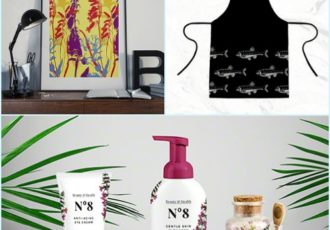
Using my hand painted botanicals, I apply my skills in Photoshop to design repeat patterns, manipulating the background colors, scale and juxtaposition of forms. My intent is to try and lend a more contemporary feel to the botanicals while retaining their natural appeal.
Although botanical subject matter is not new to the art licensing world, there is always room for a different interpretation. I am continually inspired by nature and like the idea of art on useful things like aprons, tabletop, or stationery.
I am attracted to art licensing because it is somewhat speculative. I can create what inspires me and then “go fishing” with the designs. I find a greater sense of freedom to be creative and pull from my own personal experiences with the subject matter that I choose.

AS: Your portfolio shows designs on prototypes. What is the thought process behind this?
DW: We start with a pattern and then determine the type of product we might like to see it on. We try to consider the manufacturers perspective as far as the ability to market the product. In a way, it advances the dialogue between licensor and licensee to see the art prototyped, which in turn, helps determine if there is going to be a good business fit.
Linda creates product templates using the vector tools in Photoshop (not Illustrator) and brings scanned art into Photoshop. Then she finesses it onto the templates using clipping masks, pattern fill layers and layer styles.
AS: You’ve done a lot of research before exhibiting. What suggestions would you have for other artists looking to get involved in shows?
LC: Walking the Surtex show provided us with a wealth of information about what presentation style appealed to us as much as it defined how we did not want to present ourselves.
We tried to get ideas about the type of products that might work with our designs, current trends and the quality that specific manufacturers had to offer.
In preparation for exhibiting your work, we suggest:
- Give yourself a full year and get organized with a timeline of what has to be done and when.
- Develop your materials with both a consistent look and message. Repetition helps the audience to begin to identify the imagery with your name.
- Take advantage of the free promotional opportunities and have a story to tell that is your own.
We did a small scale mock-up of our booth in foam core board and placed scaled copies of the artwork into the model to help us visualize the overall look of the booth This made installation so much easier because the majority of the decision making was done in advance.
AS: Your botanical style is “authentic” to your personal vision, exemplified by your blog, which is about gardening. How this was developed?
DW: Our blog is about art, gardening, cooking and the home: the things which influence our lifestyle. Choosing to illustrate flowers, fresh fruits and vegetables as the theme for our business is really the result of a lifestyle that we shared starting at a very young age. It was not unusual that we each chose to study art and then came full circle to create a business that is very much about bringing art into the home, using nature as our subject.
We have a shared sense of aesthetics that makes for a great partnership, and bounce everything off one another to reach a level of refinement that we can both feel good about. We are brutally honest with one another – through the process of collaboration, it can often lead to something far better.
Interview with an Art Licensing Agent
Jun 19th
By Carolyn Edlund
Recently I had the pleasure to meet with Julie Ager, who is the Licensing Director for Artistic Designs Group, an agency in Crownsville, Maryland. She answered some questions for artists who may want to license their art.
AS: When you are looking for a new artist, are you looking through websites, or do you get them from referrals?
JA: A little of both. There was one particular hole we were trying to fill recently, and we were out there actively looking at websites and also at Etsy, which is a good place to look.
AS: When you view an artist’s website, what are you looking for? What do you feel could be improved?
JA: I’m going to share the advice that we recently got on our own website. Make sure that we understand what you are all about, and your website reflects that as an artist. It doesn’t mean “throwing everything out there to see what sticks.” You should have an idea of what’s going on in the industry. There are certain websites, with absolutely gorgeous work – but I have no clue how we would use it. It’s beautiful, from a talented artist, but the topic is not marketable, and the style is not marketable.
AS: How does an artist know their work is right for licensing?
JA: Sometimes you’re too close to your work. In all fairness, licensing is not always right for everybody. To be a licensed artist is not like being a fine artist at all. For a fine artist, you can follow your passion. Do you have to adapt to the market? Sure. But not to the extent that you have to with licensing. You have to be very flexible and versatile and willing to change things because someone else tells you. And also you have to be willing to find a way to make yourself happy as you’re doing it. You need to create your own path in licensing so that you are fulfilled.
AS: What do you see trending?
JA: Let me change the question. We are not a trendy art licensing agency. We tend to be more traditional. Not everybody needs to be trendy – you still have to understand the market you are selling to. Not every customer is a trendy customer. A lot of people will look at what is the latest color, or flower, or graphic geometric, or international influence. For some artists, that is really important. For others it is not. I’d say for half of our artists, if they were following this year’s trend, it would not meet our customer’s needs.
AS: Do you recommend that artists who want to license look for an agent?
JA: For some people. An art licensing agent works if the artist really doesn’t like the minutiae of doing contracts – or if they are afraid of sales, then yes, you probably need an agent. But the flip side of that is, if you are already good at sales and the business end of things, and you have the support and network to do that, you don’t need an agent. What would happen is that you would end up stepping all over each other.
AS: What do new artists need to know about fees, how much control the agent has, and what kind of business to expect?
JA: First of all, expect to spend the first six months to a year developing your portfolio and your own voice, if you haven’t already done that on your own. What you should then expect is that your agent will give you feedback on what is working well for the agency. You have to have enough wherewithal to translate that to your own art. I personally, as an agent, would not be telling a newbie to be painting a certain subject, but what I would tell them is that I’ve had five people recently asking for that subject, or that I have seen a lot of people put it out this year. With that type of feedback, they will have to make the translation.
The times that it works best is when the artist and agent work as partners. If an agent is giving all the direction on where to go, and the artist is not learning it on their own, or if they have decided they know better and want to go out and sell their art, then it doesn’t work. Spend the time learning and understanding where your art works best. It’s a collaborative effort.
As far as fees, the artist makes their money with royalties. That royalty will depend upon what industry you’re in, and the volume will vary. The agent normally gets 50% of the royalty in commission. The thought process is that it frees the artist up to do more artwork, and that the volume should make up for it. But you have to actually put in the effort to make that happen. Fifty percent is a big chunk.
AS: So if marketing and selling would take up more than half an artist’s time, they may be paying themselves more efficiently by having an agent.
JA: Absolutely. And the artist should be able to count on an agent for contacts as well. Also their expertise, and knowledge.
AS: Given the fact that the economy has been tough and the market difficult, how do you see the future of licensing?
JA: Last January and the summer shows have been a big improvement. We are not to 100% yet, though. Manufacturers are starting to try again, and they are starting to buy again. They are willing to experiment a little bit more.
AS: Were they being very safe in what they were buying last year?
JA: I think so, yes. It’s hard to find an extremely creative person who is in the manufacturing process. They have been playing it safe and putting out what they know has been selling in the past. Sometimes this is very frustrating to the artist, but the artists needs to respect the manufacturer too. A lot of times the artists get very frustrated with manufacturers. But those people have to answer to the balance sheet, or answer to a manager who says, “This has to sell.” Which means they can’t always take a chance on something even if they believe its good.
AS: As an agent, you have ways of contacting your prospects to present them with artwork. What would you recommend to artists trying to do this on their own? Any suggestions?
JA: I would suggest getting in front of their prospect face to face, whether it be at trade shows or making appointments near where you live. I have found that if you just make cold calls to people you have never met before, your prospects are not as good as if you have met them and spent time either in person or on the phone understanding their business. You don’t know what buying cycle they are on. You don’t know what they are looking for, you don’t know their personal aesthetic. You won’t have a very high ratio of results, even if you have taken the time to study their business. You will have a much better success rate if you either get on the phone with them or go to a trade show or go to an appointment. Ask them if you can stop by.
AS: If an artist does put in the time to set up an appointment after they have done their research, they need to have a presentation. How do you make presentations in an appointment with a buyer?
JA: That depends on how well I know them. If it’s somebody I don’t know, I put extra effort into a presentation that says not only what the artwork is, but how we feel it can be used. If I know them well, I may just send the artwork, but even then it might be something for a very specific project. We may send a mock-up of that product. Or it might be a concept that we’re trying to pitch that may not have been done before.
Interview with Surtex Manager Penny Sikalis
May 18th
By Carolyn Edlund
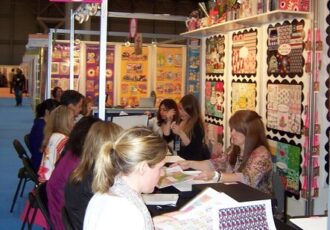
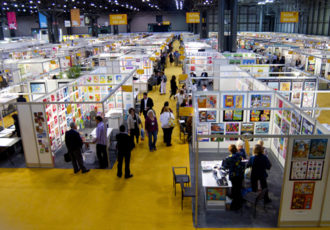
Surtex, the “marketplace for original Art and Design” is a major art licensing trade show which takes place in New York City every May. Show manager Penny Sikalis graciously agreed to an exclusive interview, which ranges in topic from trends to marketing to what a new exhibitor can expect. Could this be a good trade show for your career?
AS: We know that today the economy is really tough and going to a trade show is very expensive. Artists also have a much bigger presence online where they can attract business. Why should they come to a trade show?
PS: Many reasons – one, it’s the only venue where they can actually physically present themselves to a multitude of professionals in the industry, all prospective clients of theirs – manufacturers from all over the country in all different product categories. It’s a face-to-face venue which is quite different from all of the online venues that are in existence today. So there is a huge benefit for them to be physically present, to meet face to face, and show their artwork to thousands of manufacturers in three short days.
AS: Who do you think would be an ideal candidate to come to your shows as an exhibitor?
PS: There are many ideal candidates, per se. The show is filled with artists, designers, licensing agents, and design studios. The latter two represent a number of different artists, designers, brands, properties – they are all ideal for being here. They can all expand their businesses here as they are able to meet with potential clients, nurture relationships with existing clients and also get a real sense of what is going on in the industry to stay on top of trends and industry issues. There is so much that people can do at Surtex. Manufacturers, retailers, and product developers come to Surtex to find a real diversity of art – cutting edge art. They want to find the latest and the best surface designs that are going to make their products very special and sell off the shelves.
AS: It sounds as if someone coming here as an exhibitor is connecting with a lot of different people.
PS: They are connecting with every aspect of the industry, exactly. Retailers are doing more of their own product development, so we have found over the last several years that there is an increase in retail attendance at Surtex. Those retailers are looking to buy or to license artwork as well.
AS: In your opinion, for new artists coming to Surtex, what would be a reasonable expectation for results?
PS: It really depends on the individual, and how far along they are in their business, what their business plan is, and what their goals are for their business. For somebody new to the licensing industry, someone new in business in general, their expectations need to be realistic their first time here. It will be very much a learning experience, as they are meeting a variety of people and understanding how the industry works. We would encourage them to take classes throughout the three days. We offer a fabulous conference program. For anybody who is new in the business, I would encourage them to do a lot of homework beforehand, so that they know what to expect, but then also once they get here, they will continue learning. They will make a lot of contacts. They will likely not close any deals, but if they do, that is terrific. It will be more of an exploratory “learn and see, get your foot in the door, get lots of leads and follow up.”
AS: So it takes some time to get traction at these shows. I’m sure part of that is that they need to be credible, that they have to have been “seen”. Would it be reasonable to say that you need to come to the show two or three time?
PS: Absolutely. We generally say it takes about three showings to become credible, to really know what you are doing with your business and how to establish yourself within the industry. The second year the expectations will be different and the results will be different. The third year, the results will be much better as well.
AS: You talked about people doing their homework. What would you suggest that an exhibitor do as pre-show activity so that they can get the most from Surtex?
PS: There is a lot that they can do, and a lot that we offer them so that they can be best prepared for the show. I think they need to read trade publications, whether they are printed or digital. It’s very important to get an understanding of what’s going on in the industry and also look at the various videos and other media that give a bit of a sense of what Surtex is like, so that they are not walking in without having a good idea of it. We also offer webinars for all of our exhibitors before the show. The webinars start from the very basic “OK, you’re in the show now, here’s a primer on licensing, let’s make sure you understand all of the steps.”
We also offer webinars on marketing and how to promote yourself through your own types of marketing vehicles as well as those that we offer at the show. And we have several logistic, more operational webinars as well so that people know what to expect, how to set up their booth, how to send their materials here, when they should be here, etc. Also one thing we do is we calm people down. Everybody is very nervous and excited about their first showing. We give them as much information as possible so that they can be prepared.
AS: Are you seeing any changes in the makeup of the buyers who are coming to the show? You mentioned retailers. And what about attendance, how has that been affected recently?
PS: For this show in 2011 we are anticipating a very strong show. The economy is turning around, and there is more excitement and more interest and more positive feedback that we are hearing from our customers, exhibitors as well as from attendees. Manufacturers are looking for new art. They need new art to put out there to get the consumer excited and meet consumer demand. Yes, the last few years have been tough for everybody. Product did not sell through as well at retail, which did impact those folks who are licensing their products. Those royalty checks weren’t coming in as quickly as they had been. This past year, things have definitely turned around, and from all indications are moving forward. There is a lot of activity right now taking place in this art and design community. That bodes well for manufacturers as well as all of Surtex exhibitors.
AS: Could you tell us about any design trends that are coming in right now?
PS: What you are seeing on the floor at Surtex is a very big picture of what is trending. These people are ahead of the product curve. They are helping develop products, so what’s here on the floor is what you will see at retail in another year. What I’m seeing is fresher colors, unique combinations of colors, more graphic designs. Slightly less on the floral side. Some bold geometrics. There really is a variety of styles. I think that is what makes the mix of exhibitors here so unique – that there is something here for everybody, and for every product category.
AS: If you were a buyer walking the show today, what would you like from exhibitors? What would make it easy for the buyer to say “yes”?
PS: Exhibitors need to be cognizant of how their designs will be interpreted on a finished product, and when walking the floor, you will see that some exhibitors actually take that to heart. They will present their designs on mocked-up product, or they will show illustrations of their design on product. So they are not only showing a flat piece of art or surface design, but they take that surface design and engineer it for specific end uses. I think that becomes very helpful for buyers so that they can visualize how that design will appear on their product. Some exhibitors bring in their “past successes” and actually show the finished product. They show what they have been able to do and how their product lines have been successful for manufacturers and retailers.
AS: Do you have big plans for the future? Where do you think your show is going?
PS: It’s something we are always thinking about – how we can enhance the show and meet the needs of the market. We pay very close attention to what is going on in the industry. We have an advisory board that’s comprised of both exhibitors and attendees. We hear their thoughts and really know where the market is going. We are developing plans for next year, and expect the show to continue growing. Another indication as to where the economy is – last year we had 225 exhibiting companies. This year our show floor has 277 exhibiting companies. That’s an increase of 23%, so it’s quite nice to see that business is starting to thrive again. I think it will continue. I think we will bring more and more talented artists and designers and there will be more and more surface design on all kinds of products going forward.
FOR MORE INFORMATION ON SURTEX, CHECK THEIR WEBSITE AT WWW.SURTEX.COM
Today I will speaking at the CREATIVE SOULS TELESUMMIT on the topic of "Putting Your Dream Into Action: How Creative Entrepreneurs Can Market and Sell Their Work." from 12 noon to 1:00 p.m. Pacific time, 3:00 - 5:00 p.m. Eastern. Please join me - it's free! Click here for more information.

Print
Digg
StumbleUpon
del.icio.us
Facebook
Twitter
Google Bookmarks
Reddit
email
FriendFeed
LinkedIn
Tumblr


Featured Artist Leah Jay