A Site for Emerging Artists
Posts tagged New York galleries
Interview with Artist’s Agent Samantha Levin
May 18th
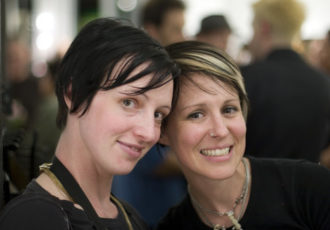
Samantha Levin is an artist’s agent, working in New York City. Intrigued by her title, I asked her to describe what she does, how she works with artists, and the benefits of this type of relationship.
AS: What is your background, and how did you get into the business of representing artists?
SL: I have a studio art degree in sculpture from the School of Visual Arts, and I’ve been immersed in the art world in various ways since graduating in 2001. Most of that time I spent trying to promote my own artwork.
About four or five years ago, I began meeting some of the artists from the Pop Surreal and Lowbrow scenes. Carrie Ann Baade was one of the first followed quickly by Molly Crabapple and Travis Louie to name a few out of many. Much friendlier than most guarded gallerists, these networkers were easy and fun to meet. They were not only talented, but business savvy, and constantly looking for new ways to sell their art. Many of these artists began asking me to help them sell their work and I’ve been doing so for three years now.
AS: The recession has actually presented opportunities for you and the artists you represent. How does this work?
SL: Because of the recession, many old conventions and habits that ran the art world in the past no longer work. Gallerists have been trying to find new ways to make a living and, as a result, are more open-minded towards ideas that they may have previously shaken their heads to.
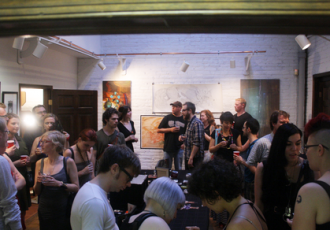
One thing that has becoming more accepted is the use of alternative spaces or “pop-up galleries” which can have less overhead than a traditional white box. One of the venues in which I put up exhibits is a bar called the White Rabbit. Such venues (bars, restaurants, cafes, etc.) generally have distracting décor, inefficient lighting and there’s more of a chance that art will be damaged while on display. Because of this, they carry a stigma: If an artist shows in one, they must not respect their work, so why should a collector? The White Rabbit has white walls, the art is always hung safely and special lighting exists to let the artwork stand out. This, combined with my use of the internet, helps me sell work and promote an artist’s career. It’s still too risky for an artist who has been exhibiting in galleries for a while to show in any bar no matter how well put together, so I generally only exhibit work at the White Rabbit of emerging artists who are looking for their first solo exhibit or have not shown their work very much at all.
AS: How many different artists have you worked with? Are your relationships exclusive?
SL: I’ve worked with quite a few artists on varying levels, adjusting to each depending upon what they bring to the table. Some make a living from selling their work while others are just starting out. There are a few with whom my relationship has become very strong. While I have helped them, they have also helped me.
I do not feel comfortable with representing anyone exclusively. Such a relationship would limit the control an artist has over their work and thus choke the reach their artwork could have. There are very few occasions where an artist would benefit from an exclusive relationship with a gallery or agent. An artist should be very careful about signing into such a relationship, and weigh all the pros and cons. The most successful artists I’ve seen have several gallerists or agents working for them in different cities to promote their work.
AS: What are the greatest benefits agents can offer to artists?
SL: An agent can find niches for an artist’s work that the artist may not have the time to explore. Also, they often have a collector base to whom they can introduce your work. They can also advise an artist as to where they might want to steer their career. It really depends on what strengths the individual agent has and what the artist needs. Are they a blogger with many readers? Do they have a strong collector base? Who else do they work with? Would they help manage an artist’s career if need be?
AS: What are your current projects, and your future goals?
SL: Artwise, I have a wonderful schedule for the White Rabbit for the next few months showing the work of C. J. Stahl, Buddy Nestor, Erin Endicott and Tun Myaing. My arts organization, Anagnorisis, is very excited to have been awarded a grant from the ISE Cultural Foundation for an exhibit entitled Another Roadside Attraction that will be taking place this fall. I have interviews of artists in the works including Christian van Minnen, Travis Louie and Dan Ouellette. I’ll soon have a new website up as well, at http://artanagnorisis.com
The future holds a lot of promise for me and the artists with whom I work. I know it will be prosperous!
Who is Laura Lee and How Did She Make it in New York?
Feb 8th
Her bio reads, “Laura Lee Gulledge is a graphic novelist, scenic painter, fearless explorer, body painter, event
hostess/producer, self-art-therapist, and art teacher who calls Brooklyn home”. Laura Lee is a prolific artist. Her drawings seem to be part of a larger story, perhaps harboring a secret, or carrying a cryptic message. In our conversation, she reveals the larger story, the story of her life. How she came to be working on her first graphic novel, and creating art in New York and internationally. . .
AS: For years you created hundreds of drawings, watercolors and mixed media pieces. How did you discover what they were meant to be?
LL: I originally started cranking out all these drawings as a personal challenge back when I was a middle school teacher. It became my own breed of art therapy, evolving into self portraits illustrating my emotions. They needed to be a book . . . somehow. The first 700 drawings were in sketchbooks, so in my gut that’s where I know they belonged. A book you
can hold in your hands, interacting with the art one-on-one, it’s more intimate. Displaying them individually in galleries felt artificial, so when I’ve done solo shows I plastered the walls with an overwhelming number of drawings so they could speak collectively.
I read my first graphic novel only three years ago, and it was such a relief to discover this new medium where my art could perhaps eventually find a home. I had made 1300 drawings in the past eight years, telling bits and pieces of my story, so why not just string some of them together into a single narrative? Lightbulb!
AS: You have traveled extensively, and your work reflects the influence and inspiration of each place you visited. Could you discuss your trips abroad and how they have affected your art and your career?
LL: Travel is my favorite teacher. Besides the extraordinary people, in each new place you are introduced to a new cultural and visual vocabulary. It fills up your own mental library, so you have a richer well of images to draw from and reference.
In Iceland I drew pictures about the landscape of snow and ice. In Spain I loved the architecture, so I drew buildings by Gaudi and the Alhambra. In Ireland I copied Celtic knots and patterns. In Turkey I painted intricate designs from their pottery, rugs, and calligraphy. In Prague I let myself indulge in the graceful lines of art nouveau. In Ghana I learned batik and painted Adinkran symbols. My experience in Ghana in particular (where I volunteered teaching art in different villages) was by far the most perspective-changing. I never thought I’d find myself teaching acrylic painting without running water or electricity!
AS: Moving to New York was a big step in your life. Why did you make this move, and how did you launch yourself as an artist there?
LL: When I was living back in Virginia it was clear that wasn’t where I would find my audience. I knew if I was serious, I’d go to New York, but I didn’t even know anyone there. . . it scared the crap out of me . . . so here I am!
It was through an absurdly serendipitous series of events that I ended up moving in with a family in Manhattan who had an extra room. I spent my first year learning the lay of the land. In my second year I was planting lots of seeds and making connections. Then finally in this PAST year everything started growing at once – graphic novel book deal, painting Macy’s windows, producing/hosting events, holding two solo art shows, doing body painting, joining a comic studio, and getting a comic on Act-I-Vate.
How did I launch myself? I just threw lots of stuff out there not knowing what would stick. I presented my work to lots of galleries until I finally got my foot in the door with some group shows, went to a lot of art openings to meet like-minded people (places like at Ad Hoc and Honey Space), self-published zines that I sold in various comic/book stores (Forbidden Planet, Rocketship), got actively involved with different organizations and creative collectives (Madagascar Institute, HiChristina!), hung out in new subcultures (like street artists, bike messengers, comic artists, scenic painters, karaoke kids…), produced a lot of art and handed out a lot of stickers.
AS: Could you give us some details of your current project creating a graphic novel for young adults?
LL: The book is called “Page by Paige” and it will come out in Spring 2011
by Amulet books, the young reader division of Abrams Books. Most coming of age stories seem to tell the story of an character learning to accept who they are and growing into the person they are destined to be. I wanted to express this self-discovery specifically though the eyes of a budding artist.
The main character is Paige Turner, a shy redheaded 16-year old from Virginia who moves to New York with her family. (Yup, shamelessly autobiographical.) She starts drawing in a sketchbook, both out of her feeling of isolation in this new city and her secret desire to be an artist. Like many teenage girls with thriving imaginations, she is reserved and quiet on the surface. Her external self doesn’t mirror her whimsical internal world, which is reinforced visually through the opposing drawing styles that are used to her express her duality. But as she grows confident as herself and as an artist, her two worlds start to merge together.
AS: Many emerging artists feel unsure of where their path as an artist will take them. Yours is very unusual. What would you recommend to others who are pursuing their dreams?
LL: It’s not talent alone that makes one artist successful and another fail. The ones who accomplish their goals are those who are more driven, organized, and better at promoting themselves. It’s the ones with follow-through who get that all-too-essential foot in the door.
Most artists are not natural business people, but it’s just something we have to embrace. . If you don’t push yourself and keep yourself motivated, then no one else will! I try to have various projects in the pipelines at all times, because some of them inevitably won’t pan out. Invest your effort in areas that are totally new to you. I’ve found that in a city like New York City, different scenes are more connected than you’d think.
There’s no better way to prove your credibility than by keeping your nose to the grindstone. But you need to find a balance between cranking out your artwork in your studio and maintaining visibility outside your studio so you can further develop your network. Normally the connection that leads to an opportunity comes about because you randomly meet a person though another person at some event. You never know where your connections will lead, so be verbal about yourself and stay on other peoples’ radar.
Surround yourself with creative people who you admire, who challenge you, perhaps even intimidate you, because you’ll automatically step your craft up a notch. It’s like how when you put a small goldfish in a big bowl then it’ll grow to fit the bowl. Most of the really talented people I know don’t feel like they are qualified to be doing what they’re doing . . . they just acted like it until they fooled themselves into believing it.
Visit Laura Lee’s website, read her blog, and see her portfolio.
Selling Your Work in New York Galleries/An Insider’s Story
Jan 25th
Guest blogger Rhonda Schaller is an artist, gallerist, and the Assistant Director of Career Development at New York’s School of Visual Arts. She has an amazing wealth of knowledge, and offers in-depth steps to sell your artwork through galleries or as a self-produced artist. Bookmark it, print it out, study and learn how to advance your art career!

Rhonda Schaller
I want to talk with you about the New York City art world and how to stake out a career path as a fine artist. The art world is a market- driven business, like stocks, like real estate, like most commodities, and it is changing. As is the entire world market for art. Everything is in flux right now, as would figure given the state of the global economy and the changing face of all commodity based enterprises.
Based on my research on the art market, what I have learned from reading established dealers like Ed Winkelman who has a great blog, my own experience as an alternative New York City gallerist, and as a successful working artist for the last 26 years, I have collected information I would like to share with you.
I became fascinated by art dealers in 1998 when Holly Solomon, the late great contemporary art dealer made her first visit to my studio. Before her death a few years later, she and I would shop at Issey Miyake and go for chicken soup, and talk about art. I was 40 then, the same age she was when she started her gallery. She taught me a lot. What I learned from those talks I applied, and that wisdom has helped make my self-produced career both fulfilling and meaningful.

Rhonda's mentor Holly Solomon.
I have found that art schools do not teach how the art world functions and what you – the artist – should do. Or what you need to know. Even if it – the market for art – is changing, and in my opinion, new models need to be created – you need to know how it has worked, how it works currently, and then you can make choices that fit your aspirations and goals.
Artists do not know the difference between self-producing and working with a commercial art dealer. Many artists do not know how to get their foot in the door in either world, and if it is the right foot or right door for them (so to speak).
So, this is what I have discovered in my research and in my life, about how the commercial art world works, at least for now. Is it for you? Lets dive in.
- Setting career goals
- Dealers vs. self-producing
- How NOT to get a gallery
- Steps to build your career
Set Your Own Career Goals
You can have a successful art career, be reviewed in magazines and newspapers, be featured in online Webzines, and create and contribute to blogs. You can have a core of dedicated collectors, and find new buyers, be collected by public curators for permanent collections and make a living with your work.
You can apply and receive grants and funding for your projects. You can do all of this, support yourself with your work without a commercial New York gallery. You can also be successful if you are represented by a New York commercial gallery or a series of galleries regionally, and work together with a community of like-minded artists or a dealer in the commercial art scene to pursue your dreams. There is no one way to be successful.
You do need to set your own goals and have a vision of your own career. That is the key. Then, you can create the right strategy of next steps to manifest that vision.
Relationships: Dealers and Curators
Art Dealers are a part of the art-as-commerce equation. Curators are part of the art-as-education equation. Artist-run galleries, Co-ops, alternative spaces, juried shows, and the Internet are making it easier for artists to find a market on their own. It comes down to relationship building. It takes time and effort, but it is the most important aspect of being an artist.
You will need to build relationships with one or more of the following: dealers, curators, collectors, critics, friends and family who will buy your work, and other artists – throughout your career.
Some artists who operate outside the art world structure have a harder time ending up in museum collections and private collections, and the dealer is the main contact to enter into established public collections. I have found it satisfying to create relationships with Museum curators and collectors directly as an artist, and have found my way into their collections through those relationships.
Newspaper reviews are egalitarian, and self-producing artists can find their way into the “public” press easily. Online Webzines and blogs are great ways to get the word out about your work as well. However, a commercial gallery can provide additional market opportunities beyond what an artist might find on their own. A dealer can help raise prices if they have a strong collector base, and that is nothing to sneeze at. And, if they have a decent advertising budget, can create higher audience traffic through well placed articles and more reviewer opportunities with art magazines. This can lead to higher price points.
Being Self-Produced vs. Working with a Gallery
The advantages of working with a commercial gallery in my view can include:
- Reviews in major art magazines
- Larger audience and higher prices
- Easier access to senior curators who control purchase awards for museums
- Greater likelihood of high volume sales
- Feeling validated as an artist
But the disadvantages can include:
- Finding a gallery who will work with you in the first place can be a dispiriting adventure, ego deflating and down right frustrating and demoralizing
- Once you get a dealers attention, it can take years before your first show
- Making enough money to split with the dealer
- Not being allowed to take creative risks in your work
- Not being able to deviate from a style that is selling well
- Being locked into a relationship and a showing cycle that is unfulfilling
Working with a commercial gallery does not mean they do all of the work for you, that they make you a star, that you are set for life, or that you still don’t have to pay out of pocket for advertising or other show related costs.
It is a business partnership, not a supportive family. Be mindful of your ego here, and the need to say “ My dealer says…blah, blah, blah..” at parties or to your fellow artists to validate your artistic identity.
Now, the advantages of being a self-produced artist can include:
- Control over your exhibitions and what work you show and where
- Tailoring your market message for your style and changes in style
- Ongoing dialog that can support your work with alternative or fringe folk
- Not sharing the proceeds of sales and choosing your price point
- Deciding how often you want to show
- Not being locked into one space or one city or one style
- Independence in creative direction and installation freedom
- Being your own boss and an entrepreneur
The disadvantages:
- Having to work at creating, promoting, marketing, funding, etc..
- Creating a marketing plan and sticking to it
- Sustaining a creative business on your own initiative
- Maintaining your studio practice day to day
- Handling the finances, budgets, sales tax
- Being your own boss and an entrepreneur
Both have advantages, both have disadvantages. I hate being told what to do, so I love being a self-produced artist. I have loved being a gallerist (non-traditional) and choosing the artists I promote. The key for me has always been control of the message, control of the medium. You have to find what works for you.
If you choose the commercial gallery route, what NOT to do:
Stop sending unsolicited jpegs and slides to hundreds of galleries that you do not know. Stop sending unsolicited emails with jpegs. Stop sending unsolicited packets in the mail. Stop going into galleries with a CD or your portfolio in hand and asking them to look at it, and being insulted when they say no. STOP. STOP. STOP. They will not discover you that way, believe me – I know.
When I had my brick and mortar gallery on West 27th street in Chelsea, I would get 1000 unsolicited submissions via email every year. I still get them, and I have moved my gallery to an online format. I DELETE THE UNSOLICITED SUBMISSIONS. Not because I am mean, I am a motivator, a gallerist who loves emerging artists and helping others. You can read what some of the artists I have worked with have said at Linkedin (click on “view profile” to read the recommendations).
I will not look at unsolicited work unless I have posted a call for submissions on my gallery website, and neither will most other dealers I know. Why? Because they are busy positioning the other artists they have already made a commitment to work with. When I have the time to look at art work form artists I do not know, I state it up front. Then, I look, I comment, I curate, life is good.
Most artists send out unsolicited emails with urls and jpegs hoping a dealer will see how wonderful they are and discover them. But you must be more targeted in your approach if you want a dealer to really consider your work. Know who you are the right fit for, and who is accepting submissions.
You should choose the gallery that’s right for you by carefully studying their curatorial ideas and exhibition program to make sure it is a good match for your work.
Do not send submissions to a gallery that you have never even been to. Visit the gallery many times during the season, look at different shows they host to make sure their curatorial style is the right fit for your work. Visit their website and review the shows they curate, and the lists of artists they have exhibited. How do you compare? Style, level of success, medium, etc… Is the gallery accepting submissions at this time? You must know this in advance, before sending your “ I am an artist looking for representation” email, if you want to seriously be considered for a show.
So, here are the steps I would suggest you take first, in this order, before sending out all of those mass emails to the hundreds of galleries on your mailing list:
Steps to Take to Build your Art Career
- Build a supportive network
First off, you can’t do this alone. Working in your studio is a lonely business most times. You need a community. I tell my students and my clients to hang out with passionate people, other artists, visual, writers, poets, performance artists. Anyone who inspires you, understands what you’re going through, and will share opportunities that they hear about with you should be a part of your personal network.
You need a community of other artists in your life. You need a network. Because making art is such an isolating business, you have to make sure you are not all alone in it. We need inspiration from others. We need to see what is going on in our field, and build relationships. The world works this way. All business works this way. Artists need to learn to work this way too. Networking and researching should be what guides your career from the business side. You job is to build a bridge between your creative mind and your business mind.
- Get your work online and in artist registries
I love online art files. This is where I have looked for artists to add to group shows I have curated. I like to discover artists on my own. Many dealers do as well, and everyone does it a little differently. I like the curated slide registries too, though some are open to all artists. Many independent curators look through these online art files and registries and this can lead to group exhibitions and other opportunities.
You can research these on the internet and they are a great way “to be discovered”. There are physical registries housed at non-profit arts organizations or on their websites and purely online registries. Work with the ones that you feel an affinity towards. The important thing here is to have your work “findable”, digital and online, out in the world, out of your studio, available for others to see when they are researching for shows.
- Take a business course for artists
In many cities across the county there are arts councils and non-profit arts organizations that offer business classes. Some may even be in how to be an artist and create success. The Creative Capital Foundation has a great series of professional development workshops. In addition, I would suggest you look for how to be a freelancer, how to run a small business, etc.. Look for these type of programs in your community, you will meet like-minded folks, and fulfill the first step of forming community.
You will benefit greatly from learning the “business” of running your own business and make no mistake, art is a business. Any professional practices class will be helpful, and many are taught locally. There are also creative career coaches and mentors for hire. Invest in yourself and get the knowledge you need to launch yourself properly.
- Get out of your studio and into the world
Organize an exhibition at your library, write reviews for a blog, intern for an art handler in a gallery, work for a museum in any department, work for a gallery and serve wine at the openings, teach an after-school class in art, join an artist support or crit group, start an artist crit or support group, go to artist salons, go to lectures, go to openings…. Meet people, and see what is going on in the “scene” you want to be a part of. I met some of my best curatorial contacts while being a security guard at MoMA when I first got out of art school.
- Set your goals
Think about what your career goals are as an artist. What is your potential market? Where do you think your artwork belongs in the art market? These are very important questions, so take your time coming up with the answers. No one knows but you.
Then decide how you will self-produce and/or go after a commercial gallery. Begin to write down a few long-term goals and a series of short-term goals to help you match your art work to a prospective market. Do your homework – where does work in your style, artists with your aspirations, and dreams show? Who is your audience or potential audience? Where do they hang out and who do they collect? What is the best way to reach them? Which galleries cater to this audience?
- Create a strategy
Once you have your goals set, now it is time to create a strategy to reach those goals. Research your potential market. Understand what your potential market is like and find the spaces, alternative or commercial, that offers you the visibility to target that market. This takes work and research but will pay off your entire career. Research is drudgery, yes – but without the research you are flying in the dark. A targeted search is the key to your strategy.
- Stretch the limits of your market
Be creative in determining venues for your work. Your potential market can include juried shows, open calls, artist residencies, public art projects, guerilla art happenings, art fairs, art salons, coop galleries, commercial galleries, University galleries, and Museum collections and biennials.
- Be selective with commercial galleries you target
Established galleries that work only with proven sellers in mid-career will not be a good fit for emerging artists. Some galleries define an emerging artist as anyone who has not had three Museum monograph shows! Know exactly where your work falls within the art world of prospects you are cultivating. If you make spiritual abstract paintings like I do, then don’t approach galleries known for sculptural installation videos. Unless you have talked to the dealer and they are looking for abstract painters.
There will be more than one gallery for your “prospect list”. Many will be good targets for you. Know who you are marketing your work to, and who you have defined as your personal market. Spend months visiting galleries and websites looking for the right fit. It will be a great investment of time. Then gradually narrow down the galleries that are in line with your artwork and market.
- Create a prospect list
Work toward a short list of galleries that are a good match, good prospects for your work and begin to network. Now networking does not mean blind self-promotion. It means relationship building. How do you build a relationship? By not talking about yourself when you go to the galleries you are interested in.
Strive to create relationships with those galleries, the artists who show there, the folks who work there, and the dealer or studio managers if possible. Have conversations about the gallery, not about yourself. When you visit or email them, talk about the show. You may not gain initial access to the dealers, but in some galleries you can.
I tell my students and my clients all the time: It is never about you, it is always about THEM. That is the key to making the sale, the introduction, maintaining the relationship. They don’t care about you yet, so don’t expect them to.
- Create a Relationship
Creating relationships means learning to listen generously. Ask questions at an opening, or an event, or a party about the current artists show, about the gallery, and show that you understand what the dealer or staff are trying to do. Let them know that you like it. Do all of this before you broach the subject of your own work. Have a few conversations before you introduce yourself and your own work. You will get further. Better yet, wait for them to ask “are you an artist”? Then simply say “yes”. Wait…breathe….let them ask more questions, or share the comfortable silence that ensues.
If you come across as not wanting anything, you just might be in a position of being asked to talk about yourself. If you come across as “I’m one more needy artist looking for representation” guess what? They will tune you out. Now this may sound harsh, and I’m sorry. But it is the truth as I have experienced it (as both a needy artist and busy gallerist), and my point here is to share with you what I have learned in my 51 years around the sun!
Now if you are still feeling a little insulted, or miffed at me, I understand. But I’m being as honest as I can with you. Since I wear both hats – artist and gallerist (and collector too truth be told), I feel like I understand both the dealers side and the artists side of this emotionally laden equation.
You cannot force this relationship to move very fast, unless you come recommended by a very wealthy collector who knows the dealer well (which is how I got Holly Solomon to come to my studio). And even then, it is a process, and it is going to be a slow growing, research laden, cultivated relationship.
That might mean in practical terms, offering an insightful comment about the current exhibition or asking about an artist in the program you like at the galleries you are targeting. Always say something positive about the current show or other artists in the gallery. And build these relationships over time.
- Build on the relationship
There will come a point when the gallery dealer will ask if you are an artist and what kind of work you do. At that point let the gallery know what you do, why you do it, and that you’re interested in having them consider your work. If they say “Get back to me in a few months” or “Stay in touch”, which is quite typical, then do that. It is up to you to follow up. A friendly note works well, remind them of something they said to jog their memory, and that you’d be interested in their seeing your work. Ask if they have a submissions procedure, or if they do studio visits, and if they have the time to look at your work.
Pending their response, follow up with a few jpegs and/or point them to your website. The key at this point is to tie it all together: 1) demonstrate that you understand the gallery mission; 2) make clear that you enjoyed the conversations you have had up to this point; (and that they like you – people like to work with people they like) 3) THEN suggest that your work seems like a good match for them. Would they consider looking at it now? Let them pick how they want to look at it and when.
- Create a Visibility Plan
So, after you have made the jump and actually asked the gallery to look at your work and consider you, don’t stop with just that one gallery. Make sure you are reaching out and building relationships to all the galleries on your prospect list – aim for ten. The numbers will work in your favor. At the same time, build your PR. This is vital, you will be Googled! Do you have a blog? You should. Join the conversation on the internet, comment on others blogs, attend openings and professional lectures.
Be seen, be out there, be knowledgeable about the world you want to be a part of. Know what is going on. This will give you more opportunities to make conversation, and you will probably even have fun, get inspired, and feel motivated.
Look at all the empty storefronts in your city – and produce exhibitions in them. There are some great organizations doing that all over the country. Join one. Start one. Be flexible, be creative, be noble. Join with other artists who are doing interesting things in this changing art market. Form micro-market initiatives and market yourselves – get visible, get busy, promote yourself and get out there!
That’s a great way to build momentum and credibility. While gallery shopping, you are producing and building a reputation. Diversify your efforts and keep the galleries updated on your success as it builds.
Artists need to approach creating their art career (which might include getting a gallery) with the same strategies they would use for looking for a “straight” job. Self-assessment, targeted research, planning a visibility campaign, direct contact based on research, networking their way in, working with curators/reps/agents and answering ads/ calls for shows, etc… A mix of tactics produces the best results.
The key is to find a gallery that’s a good match for your art and aspirations, understands your work and believes in it. Your goal should NOT to be to find any gallery at any cost. You are a vision-maker and you deserve the right outlet for your vision based on good solid business principles.
I firmly believe that society needs its vision-makers. Both the art itself and the artists who make it, to express and lead the renaissance that will rise from the current recession. “There can be no Renaissance without a focus on art in all of its many aspects.” [1] So, don’t give up.
The steps I’ve outlined in this article should help, and remember – you can do it!
Sources:
Schaller. R. “Art Work After Art School”. School of Visual Arts, Office of Career Development. (student handout and guide) 2009.
Winkelman. E. “Advice for Artists Seeking Gallery Representation”. edward_winkelman: art, politics, gossip, tough love. (Internet/blog) 03 Feb. 2009. http://edwardwinkleman.blogspot.com/ (20 Jan. 2010).
[1] Celente. G. “The Trends Journal – Winter Issue 2010” (email to subscribers). 13 Jan. 2010. The Trends Research Institute. http://trendsresearch.com (20 Jan. 2010).


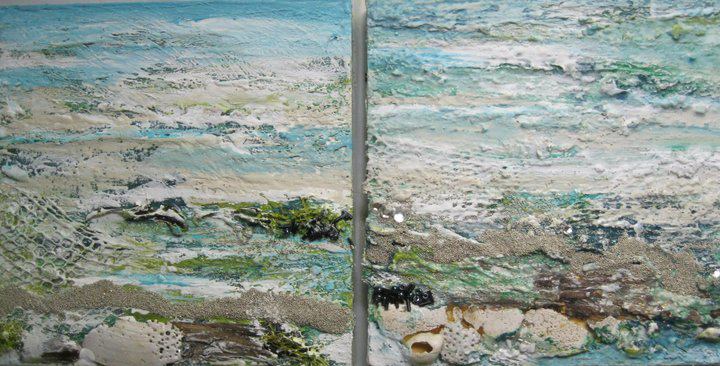
Featured Artist Sarah Tomlin