A Site for Emerging Artists
Posts tagged process of art
Why I Closed My Studio
Jan 6th
By Carolyn Edlund
I’ve been reminded lately of why I closed my studio – and painfully so. The joint in the thumb of my right hand is so sore that grasping even small things is uncomfortable, and turning a doorknob is agony. The arthritis in the base of my thumb is the latest remnant of a life spent in repetitive motion, during long hours in the studio using my hands as tools. Three years ago, the joint in my left thumb was replaced. After a few cortisone shots, the right one will probably be under the knife in the next year or so.
I closed my studio more than ten years ago. Besides general burnout from traveling all over the country flying to trade shows and driving to retail shows, my body had begun to give out. Twenty years of studio work. Leaning forward to paint and do close-up work, and hauling 50 lb. boxes of clay, tents and exhibit equipment had caused a lot of back and neck pain and sciatica. I knew my chiropractor on a first-name basis. And even though I’d hired studio assistants, the damage was done.
During my college years, a book came out that got a lot of students talking. It was called “Artist Beware.” Our chain-smoking ceramics instructor, who already had emphysema at the time, referred to it and called our attention to the dangers of silicosis and breathing dangerous fumes. We all had respirators; thank God I started out in my own studio with some safety gear. But I still wonder.
These days I see other artists are concerned about breathing toxic fumes, and the side-effects of solvents, which can be career-changing. I don’t blame them.
And so, after a couple of decades in the business, I decided to pack it in. In late summer of 2001, I started applying for jobs, thinking that it would take several months to get one. To my surprise, I was hired very quickly as a rep for an art publishing company. I had planned to go out of business at the end of that year, so I rounded up my studio helpers and parceled out the rest of our wholesale orders for them to complete while I started my new career.
On September 13, 2001, two days after the towers fell, I walked through an eerily silent airport and boarded a nearly empty, heavily-guarded airplane to San Francisco for job training during a watershed moment for my country and for myself.
It wasn’t a tough decision, at the end. I knew I was finished in the studio. We’d talked it over endlessly, and I have never regretted it. I had met not only my goals, but some great friends as well. I still see some of them and fondly remember others. But things had changed, and I needed to move on to the next chapter in my life. It was time to close the studio.
Do You Want to be a Children’s Book Illustrator?
Mar 18th
By Carolyn Edlund
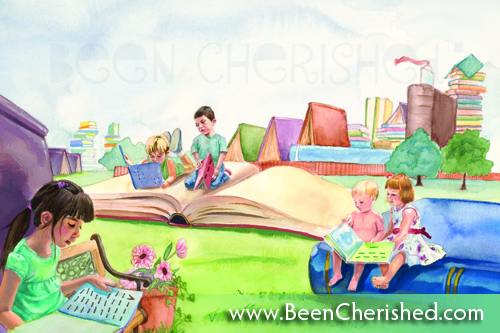
Are you interested in knowing more about how children’s book illustrators work? Here’s a step-by-step process and how to get involved in this exciting field.
Cherish Flieder, a Colorado native and children’s book illustrator, spoke with me recently about her career and how she has developed her full-time business. She partners with husband Benjamin Hummel on children’s book illustrations, greeting cards, art prints and gifts as well as freelance projects and art licensing. They also are planning to publish children’s books that they have written and illustrated together.
How do you become a children’s book illustrator? Cherish explains that her background prepared her well for this type of career. Interested in children’s books as early as grade school, she worked on a portfolio geared toward this type of illustration, and attended Rocky Mountain College of Art and Design , where she met her husband, and currently teaches as part of the adjunct faculty.
The Career and Alumni Services department of the college put her in touch her first book publisher, which gave her an opportunity to present her portfolio and get started in the business. Since then, she and Benjamin have pursued projects working with authors and publishers on
multiple children’s books.
When publishers feel that their portfolio is a good match for a manuscript, they are contacted about developing illustrations for it. First, Cherish and Benjamin read the manuscript to be sure they feel the story would fit well with their art style, and that the project is one they can be excited about. Since each project is extremely time-consuming, the illustrator needs to be passionate about working on it and being part of the finished book. A negotiation follows, nailing down the price for the illustrations, and royalties.
What’s the process of illustrating a book? Cherish explained the steps, in general:
- Break the manuscript into a storyboard layout, creating a thumbnail sketch of what happens on each page spread. The focus of this step is to make sure the story flows visually.
- Get the publisher’s approval of the preliminary work.
- Research and acquire photo reference to create final line drawings for each illustration.
- Develop character model sheets.
- Work on black and white value studies. This adds drama to the illustrations and carries the concepts throughout the story.
- Color versions are created for each page. Working with the publisher, they show the finished set and consult on any changes that will be needed.
- After any modifications are made, the final illustrations are produced.
- Scanning of the illustrations is done by digital image capture. A color press proof is made and final files are delivered to the publisher on disc or FTP.
- Cherish and Ben may design covers and packaging for the book as well, taking the project from concept to final product.
For artists interested in becoming children’s book illustrators, Cherish offers a few suggestions:
- Working for free or “on speculation” is not a good idea. A project could be time-consuming, taking a year or more for a book project. Make sure you are getting paid for your time and talents.
- Develop a solid portfolio with a singular style. Include in your portfolio action illustrations as well as static scenes. It is also important to show character consistency from image to image .
- Your portfolio must be available on your website, which should be well-constructed and load quickly. The site should be uncluttered and not confusing. Remember, visitors want to get information easily and you only have a brief time to make a good impression and attract interest.
- A resume or CV and well-written artist statement are important. A link to contact info including phone and e-mail address must be shown on every page.
- Get involved with the Society of Children’s Book Writers and Illustrators, where you will find vital information on becoming an illustrator and understanding the industry.
Images of Life/Interview with Steve Paxton
Jun 11th
By Carolyn Edlund
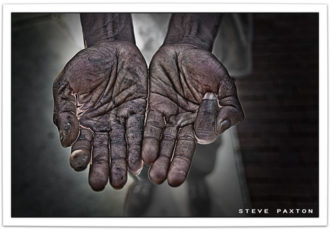
Photographer Steve Paxton has a thriving business taking wedding and portrait photos. He also maintains a separate website for his other photographic pursuits, including a project called “The Least of These”, an Urban Portraits portfolio featuring amazing images of the homeless in Seattle. His website contains stories about his subjects, information and tips about photography and approaching the homeless in conversation, videos and much more.
Take note of how Steve’s professional presentation, commitment to his work and his following establish him as an expert and a great resource for clients, as well as other photographers and artists. He shows a spirit of generosity in sharing his expertise through Q&A and tutorials, featuring the work of other photographers and promoting excellence. Steve is an outstanding model for emerging artists. He agreed to speak about his Urban Portraits portfolio and other projects.
AS: What prompted you to start on your Urban Portraits project? What will you do with it?
SP: The project began in 2007 after I started searching for something different and unique to photograph. I was slowly burning out and needed to approach photography from a different angle. As a portrait photographer, I had always wanted to capture photographs of individuals living on the street. Capturing “urban portraits” started out as something that I thought I would try once or twice just a break from the sometimes routine nature of regular portrait photography. As time went on and as I began making connections with people living on the street, I realized that it was more than just capturing photographs. Each person I met had a different life story and most were eager to share it with me. The stories help to bring my images to life. Now each year I make time to periodically head out to Seattle to reach out to the homeless living on the streets. I occasionally bump into homeless folks that I met a year or two earlier. It’s fascinating to hear about what they have been up to.
AS: On your site, you show your urban portfolio with stories of your subjects. What have you learned about the homeless people you photographed?
SP: I think about this quite a bit as I walk up and down the alleys making contact with the less fortunate. As you might guess, I mostly run into older men living on the street. Occasionally I meet a homeless woman, but they are almost always with a man. The city can be a dangerous place at night so you don’t find many young teens or women running around alone. I found that many of the men I meet on the street are dealing with one or more of the following issues:
(1) Addicted to alcohol and/or drugs
(2) Have a mental health issue, or
(3) Lost their spouse to death or divorce.
The last one really surprised me. Losing a spouse can be terribly difficult for someone. For many men, their wife is what helped keep them stabilized and grounded. It’s really sad to see a man living on the streets openly weep about losing his wife. Stepping back for a moment, imagine if you are dealing with several of these issues at once. It’s a situation that can go from bad to worse very quickly. A middle aged man loses his wife which in turn sends him into depression. This causes him to drink which leads to him missing work. This causes him to lose his job and eventually his house. One thing leads to another and he quickly finds himself living on the street or out of his car. The most striking thing about this is that it could happen to any one of us.
AS: The quality of your photographs are amazing. Are you using any special techniques to achieve the look?
SP: I use various techniques in Photoshop to create the distinctive “look” in each of my urban portraits. I prefer muted, dark, edgy urban images. I choose to apply this type of processing because I believe it suits the subject matter very well. I also like the style.
Going decades back, street photography was traditionally shot with high contrast black and white film. This creates the dark, urban feel that most of us expect to see in street photography. I have chosen to vary this just a bit by allowing some of color to show through while still maintaining a high contrast, desaturated feel common in urban scenes. Not everyone is going to like the look and feel of my images, but I am OK with that.
AS: Please tell us about your other work and how you earn a living.
SP: I have been a wedding and portrait photographer in the Seattle area for over 15 years. I am absolutely passionate about making close connections with people and I love the beauty and magic of weddings! I view every wedding as a unique challenge and opportunity to create special images that will endure the test of time. I love working with high school seniors to create images that reflect their individual style. Senior portrait sessions take place in grungy alleys, around old buildings, and in beautiful outdoor locations! You can check out what I am up to at www.PaxtonPortraits.com and www.ExpectSomethingRemarkable.com. My urban portrait work can be found at www.PaxtonPrints.com.
Catch This Escapee/Interview with Thomas James
Jun 7th
By Carolyn Edlund
Thomas James, illustrator and author of the popular blog “Escape from Illustration Island”, is fascinating on several different levels. He serves up an incredible online resource which educates and inspires illustrators, artists and other readers who visit his site. Thomas is also a smart and savvy blogger.
EFII has the complete package – check how he uses multiple modalities. Read the articles, listen to the podcasts, see the visuals, participate in contests, comment on his posts, join a community. There are books, sites, artists and blogs reviewed, and discussions of the history of illustration. Tutorials are offered, although you can request his personal input as well. EFII hits on all cylinders, showing a masterful understanding of how to communicate and involve an audience while providing a wealth of valuable and useful information at the same time.
AS: You have a lot going on. What are your current projects?
TJ: First, I want to say thank you for inviting me to share my story with your audience. I love what you’re doing here at Artsy Shark.
The project that I’m most excited about right now is my new eBook, 15 Steps to Freelance Illustration, which aims to outline the basic steps involved in building a strong foundation for an Illustration business. Even though there are other useful books out there on the topic, I’ve taken the approach of empowering every artist to organize their thoughts and formulate a strategy that fits their unique situation. I’ve done this by breaking things down into groups of tasks and by including a supplemental Workbook so that everyone can move at their own pace and make the most of the ideas presented in the book. It’s taken me six months to complete, and I’m very excited about the official release on June 15th.
Now that I’ve crossed that off my list, I’ll be focusing on this year’s ICON6 Illustration conference, where I’ll be attending as a media sponsor. While I’m there, I’ll be covering the event from the inside and recording as much audio and video content as I can to share the conference with Illustrators who can’t make it there for whatever reason.
AS: Tell us some of your favorite aspects of the EFII blog. What are your readers’ favorites?
TJ: I really love the community that has been built there by my fellow artists, and that is still growing. I think EFII helps Illustrators and other creative professionals come together and share ideas and resources. After all, the name Escape from Illustration Island comes from the idea that most Illustrators live and work in the isolation of their studio. A lot of artists have expressed gratitude for the resources provided at EFII, and that helps to keep me motivated to do more.
I have to say that the audio podcast is another one of my favorite aspects of the site. I’ve had the chance to speak with so many incredible people in the industry, such as Steven Heller, Drew Struzan, Gary Taxali, Brian Despain, and so many others. The chance to pick the brains of Illustrators, Art Directors, and Art Reps on the show has really helped to make me a better artist, and a better freelancer as well.
AS: What goals do you have, either with EFII, or other professional endeavors?
TJ: One main goal I have moving forward is to share the resources at Escape from Illustration Island with as many creative professionals as possible, because I strongly believe that it has a positive impact on peoples’ lives, and on the industry as a whole.
Also, the ability to make an alternate income from the site has allowed me to take a step back with my own Illustration work and completely redefine my style. So, I’ll be working on figuring out new and unique ways to market that style and secure more of the types of projects that I’d like to work on.
AS: Emerging artists often have questions about how to get started professionally. What resources would you direct them towards?
TJ: I have a growing selection of Featured Resources on Escape from Illustration Island, but I think some of my favorite are books like Graphic Artists Guild Handbook: Pricing & Ethical Guidelines (Graphic Artists Guild Handbook: Pricing & Ethical Guidelines), the 2010 Artist’s & Graphic Designer’s Market (Artist’s & Graphic Designer’s Market)
, and the blog Freelance Switch, which discusses best practices for freelancers. I was definitely inspired by Freelance Switch when creating EFII, but I wanted to tailor my posts more specifically to Illustrators and other creative professionals.
Featured Artist Jake Remington
Jun 4th
The JUNK: a conglomerate of found, discarded materials assembled with nails, glue, tape, and staples…patchwork mistaken for framework. Materials derived from our throwaway culture reflecting our rapid pace of consumption, assembled in such a way that suggests it will only hold temporarily.
The FUME: household chemicals, spraypaint, glue, latex, acrylic, and oil. The fume we all need. Whether its drink, smoke, religion, TV, sex, drugs, working, selling, buying, hurting, or loving; we consume it for the high, for the escape, and it gets us through the day.
These paintings are about consumption and excess. Personal, national, and global. They are about death. And living. Emptiness and fulfillment. The fragile. The delicate. The brutish. The savage. Body and mind. Pissing, shitting, fucking, and loving. They are about laughing and they are about enjoying the view while we can.
The heroes, monsters, and villains in these paintings are not unlike us. They exist in a world they struggle to control with color, line, and shape melting into one overwhelming environment. Abundant forms of communication engulf them but rarely is true communication conveyed between them. With no regulations, no guidance and no communication these characters are running out of time and can only rely on JUNKANDFUME to get them by.
These paintings are looking for a gut reaction. An instinctual, emotional or physical, response that rises to the surface of the viewer. Something to make them pause, take a second look, and think.
Goals
Not to rely on old solutions for old problems. Always keep moving. To one day (soon) not have a boss. To not have to wake up early to chase someone elses dream. Create honest work constantly.
Working on
Dealing with the way the world works. Trying not to ignore that reality but instead manipulate it.
Currently contributing to a group show at the CCCP gallery in Williamsburg, Brooklyn along with a few more group shows around Brooklyn and LES. Looking for more opportunity.

Print
Digg
StumbleUpon
del.icio.us
Facebook
Twitter
Google Bookmarks
Reddit
email
FriendFeed
LinkedIn
Tumblr


Featured Artist Leah Jay