A Site for Emerging Artists
Posts tagged publishing
Scott Price: Writer, Digital Artist, Self-Publisher

Dec 17th
By Carolyn Edlund
As internet resources allow artists and writers to self-publish, they increase their independence and opportunities. Here’s how one author did it.
For the past five years, Scott Price has been working on Power to Awaken: Totality, a book which “explores spiritual human potential and the essence of life through providing personal retreat space for experiences in silence and self-reflection.” His photography is an integral part of this project, which has been published as a pdf, and is being formatted in editions for Kindle and other e-readers.
Born into a family of academics, Scott started writing in his teenage years. His current project has been distilled from an amazing amount of written material – about enough to fill seven volumes. Scott doesn’t describe himself as a writer, or as an artist, but as a “creator,” seeing no separation between the two, as his words paint intentions or feelings, and images express them. They work together seamlessly to share the experience of being present. Although his message is spiritual, it is not written from the point of view of any particular religion. Rather, its neutrality is meant to be inspirational and connective with people of all backgrounds.
The fascinating current technology for digital self-publishing gives artists more ability than ever to move beyond their medium and to interact with their audience. A digital book may contain writing and images, but could also include audio and video, all available at the turn of a virtual page. This gives the artist more options and the opportunity to work on collaborations with writers, poets, filmmakers and others in one easily published format. Or, consider using a pdf on your art website, which allows you to literally speak about each image of your work as the reader views your portfolio.
Scott has done the research himself to learn how to create ebooks. He suggests that others interested in producing them visit websites such as Smashwords or Lightning Source and Create Space, which offer Print on Demand and distribution services. Although self-publishing has allowed all types of books to enter the marketplace (some badly edited or of inferior quality), it opens up huge opportunities for authors who take advantage of this DIY approach, while maintaining a high quality product.
What’s next for Scott Price? His background includes being a professional competitive cyclist, and he feels that his spiritual message has impact on how people approach sport and competition. He is planning a book for the “awakened athlete.” We look forward to it!
Conversation with an Art Publisher
Apr 12th
What Artists Must Know about Selling into This Market
Donna LeVan is the Vice President of Publishing for the New York Graphic Society Publishing Group, the oldest and largest publisher of wall décor in North America. She brings 30 years of creative and product development experience to the role, having directed the creative process at several advertising agencies, the Chicago Sun-Times, The Creative Black Book, Portal Publications, NobleWorks, and most recently, NYGS. For the last nine years, she has been instrumental in the growth of NYGS and its expansion into new product formats and new markets. In addition to managing the art, design, and product development areas of the company, Donna sources, directs, and selects the art for both the NYGS and Artbeats publishing divisions, and consults with both artists and customers on trends in the home décor marketplace and how those trends translate into the imagery selected for publication.
AS: You are constantly balancing your line to give your customers what they want, while remaining profitable. What is the biggest consideration for an art publisher?
DL: No publisher can remain competitive and relevant unless they are able to consistently offer their customers the right product at the right price. It is a simple enough formula, yet one which presents complex challenges in that the criteria which define “right product” and “right price” are forever evolving.
Art publishing is a trend-driven business, thus we are continually analyzing and re-evaluating what themes and styles are selling, what wall décor formats are selling, and what available technologies we should be utilizing to create our products efficiently. In this economy, it is not enough to keep up; we need to be several steps ahead in order to succeed. The publishers who have done well during these challenging times are those who embrace change and are constantly in motion.
AS: How do you decide which artists to publish in your line?
DL: We publish art for several lines and in multiple formats including prints, posters, canvases, wall decals, and a variety of other printable substrates. Some of our lines are sold to framers (who add finishing and packaging, then re-sell the works to retailers), and some of our lines are sold directly to retailers. Popular themes and styles vary from line to line and format to format, but the core need for strong decorative designs with commercial appropriateness exists across the board.
We often receive submissions from artists whose work has high artistic merit, but that is more appropriate for the gallery world than for the middle-market retail environment. We are in the business of making a consumer product – wall décor – so the pieces we publish must have broad appeal and must make sense for the end consumer. We are looking for artistic quality, but salability is of equal importance and is our number one selection criteria.
AS: What are the most popular categories of images for NYGS?
DL: We publish a wide variety of themes including abstracts, florals, landscapes, coastal/tropical, kitchen and bath, photography, wildlife, novelty, fashion, botanical, vintage, juvenile, and many others. Some themes do fall in and out of vogue, although fresh and exciting interpretations of any home décor theme will definitely get our attention and the attention of our customers.
AS: What are some of the trends are you seeing these days in the market?
DL: We are currently seeing a big shift toward contemporary styles with updated compositions and unique design elements. Typography-based imagery is in great demand right now, as are abstracts that have a colorful and whimsical aesthetic (we sometimes refer to these as our “happy abstracts.”) There are several noteworthy trends in palette as well. Neutrals featuring layered and heavily textured monochromatic tones are dominating the domestic home décor market, particularly those with a vintage vibe. Simultaneously, foundations of gray paired with bright sorbet colors are strong in Europe and have definitely been growing in popularity in the U.S. market. Other trends we’re seeing include the mixing, matching and deliberate clashing of floral and geometric patterns, mid-range to navy blue hues, muted antique-inspired metallics, and the color coral (expected to grow in importance through 2012.)
Trends, by their very nature, constantly change. Successful artists keep on top of what’s current by doing their homework online, in stores, at trade shows, etc. I strongly advise artists to make frequent visits to retailers selling our works to see what has been purchased by them and how it looks in that environment (eg., which designs stand out in the crowd, which designs would you be drawn to as a consumer, which designs are actual shoppers inspecting and buying, can you imagine your work fitting into the collection you see there, etc.)
AS: Can you describe some of the characteristics of your most successful artists?
DL: We are fortunate to be working with many artists and agents who truly understand our business and who have become essential to our continued success. These artists are the ones who create fresh, exciting, and appropriate imagery that is on trend and in demand – and they do it on a regular basis. We present hundreds of new images each month to our core customers (who are always looking for “what’s new” and “what’s next”), so we rely greatly on those artists who are fast, prolific, and tireless. Flexibility is also a common quality of our best-selling artists, as our customers will often want alterations to existing works and those who respond quickly to needs for customization, files, clearances, and commissions are ultimately well rewarded for their professionalism and efforts.
AS: How much money can artists in your line expect to make?
DL: Most of our artists are paid on a royalty basis, meaning they are given a percentage of the money we make selling their images to our customers. The royalties earned vary greatly from artist to artist, and range from a few hundred dollars to tens of thousands of dollars in each calendar quarter. Those who earn royalties on the high end of that range typically have a very large quantity of images in our lines at one time, as it’s unlikely for just a few images to earn royalties of that magnitude.
I would advise new artists to be patient and to have realistic expectations about their earnings. It takes time to build momentum and volume, but the upside potential is definitely there. Further, artists new to this should remember that wall décor is but one category in the vast world of art licensing opportunities, and should be considered just one component of a complete licensing program that enables them to leverage the same imagery across a multitude of product categories.
AS: What is the most common mistake made by artists new to art licensing?
DL: The issue that comes up most often when we’re working with new artists is their ability, or lack thereof, to provide us with high-resolution, reproduction-quality files of their work. There’s a lot of confusion over digital file types and sizes, and very often we find that artists have sold their original works before having a proper digital file of the works prepared.
Wall décor is often reproduced at very large sizes – 24×36, 30×40, 35×35, etc. In order to print at that size, we need digital files that were prepared to that print size at 300dpi (a common error is thinking that any 300dpi file will work, when in fact a 300dpi file made to be 5×7 inches in size cannot be enlarged to 30×40 inches – there’s simply not enough data captured in the file.) There have been many times that we have had to cancel publication of someone’s art at the eleventh hour due to the unavailability of an adequate file. Obviously, that’s a situation we would prefer to avoid.
We have an in-house digital photography studio and can assist artists by shooting their originals ourselves, but often the originals are not available and it’s not always practical to ship them back and forth. I would recommend that any artist seriously interested in licensing their work to large-format categories seek the advice of a professional digital photographer to ensure that they have files of all of their work archived and that those files are appropriate to the needs of the publisher.
AS: How should artists go about submitting their work for consideration?
DL: There are formal submission guidelines on our website, but in short, submissions may be made via snail mail or email. If by snail mail, color printouts are recommended in addition to a disk and an SASE must be included if the materials are to be returned. If by email, lo-resolution jpgs (up to a dozen) can be sent to donna@nygs.com. Under no circumstances should artists send unsolicited original works.
All submissions are reviewed within a couple weeks of receipt and if we think the work is a good fit with our current needs, we’ll get in touch to discuss next steps. Unfortunately, our busy schedules don’t allow us to respond to every submission, even though we greatly appreciate the interest. Also, artists should not be discouraged if they don’t get a response from us. Every publisher has a market niche and very specific needs dictated by that niche. Just because a submission isn’t right for us, doesn’t mean it won’t be right for someone else and it certainly doesn’t mean that the work itself is not of value.
AS: Anything else you’d like artists to know about NYGS?
DL: Only that we consider artists to be our most valuable resource and our creative partners in this business. Without them, we couldn’t do what we do, and we are extremely grateful every day for the amazing talents who choose to be a part of our journey.
Do You Want to be a Children’s Book Illustrator?
Mar 18th
By Carolyn Edlund
Are you interested in knowing more about how children’s book illustrators work? Here’s a step-by-step process and how to get involved in this exciting field.
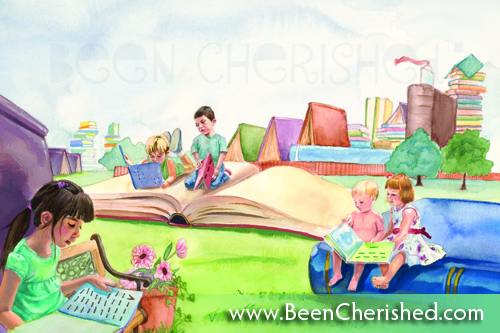
Cherish Flieder, a Colorado native and children’s book illustrator, spoke with me recently about her career and how she has developed her full-time business. She partners with husband Benjamin Hummel on children’s book illustrations, greeting cards, art prints and gifts as well as freelance projects and art licensing. They also are planning to publish children’s books that they have written and illustrated together.
How do you become a children’s book illustrator? Cherish explains that her background prepared her well for this type of career. Interested in children’s books as early as grade school, she worked on a portfolio geared toward this type of illustration, and attended Rocky Mountain College of Art and Design , where she met her husband, and currently teaches as part of the adjunct faculty.
The Career and Alumni Services department of the college put her in touch her first book publisher, which gave her an opportunity to present her portfolio and get started in the business. Since then, she and Benjamin have pursued projects working with authors and publishers on
multiple children’s books.
When publishers feel that their portfolio is a good match for a manuscript, they are contacted about developing illustrations for it. First, Cherish and Benjamin read the manuscript to be sure they feel the story would fit well with their art style, and that the project is one they can be excited about. Since each project is extremely time-consuming, the illustrator needs to be passionate about working on it and being part of the finished book. A negotiation follows, nailing down the price for the illustrations, and royalties.
What’s the process of illustrating a book? Cherish explained the steps, in general:
- Break the manuscript into a storyboard layout, creating a thumbnail sketch of what happens on each page spread. The focus of this step is to make sure the story flows visually.
- Get the publisher’s approval of the preliminary work.
- Research and acquire photo reference to create final line drawings for each illustration.
- Develop character model sheets.
- Work on black and white value studies. This adds drama to the illustrations and carries the concepts throughout the story.
- Color versions are created for each page. Working with the publisher, they show the finished set and consult on any changes that will be needed.
- After any modifications are made, the final illustrations are produced.
- Scanning of the illustrations is done by digital image capture. A color press proof is made and final files are delivered to the publisher on disc or FTP.
- Cherish and Ben may design covers and packaging for the book as well, taking the project from concept to final product.
For artists interested in becoming children’s book illustrators, Cherish offers a few suggestions:
- Working for free or “on speculation” is not a good idea. A project could be time-consuming, taking a year or more for a book project. Make sure you are getting paid for your time and talents.
- Develop a solid portfolio with a singular style. Include in your portfolio action illustrations as well as static scenes. It is also important to show character consistency from image to image .
- Your portfolio must be available on your website, which should be well-constructed and load quickly. The site should be uncluttered and not confusing. Remember, visitors want to get information easily and you only have a brief time to make a good impression and attract interest.
- A resume or CV and well-written artist statement are important. A link to contact info including phone and e-mail address must be shown on every page.
- Get involved with the Society of Children’s Book Writers and Illustrators, where you will find vital information on becoming an illustrator and understanding the industry.
Top 10 Articles on Artsy Shark this Year
Dec 29th
A countdown of the most popular articles on this blog, by readership, in 2010:
10. Art Website Basics: What Every Artist Should Know – Marketing strategist John R. Math’s excellent article on how to construct an effective web presence
9. A Gallery Director Speaks: What Artists Must Know – Robert Patrick, gallery director and artist advocate gives a 3-part interview about how to present to a gallery, and their inner workings. This is part one – don’t miss the whole series! Here are links to Part 2 and Part 3.
8. How to Fail as an Artist – a tongue-in-check list, with links.
7. What you Didn’t Know About Starting a Greeting Card Line, Part 1 – a primer for the card entrepreneur. What sells; what doesn’t; how retailers work; how to balance your line. This is the first article in a 3-part series. Check out these links to Part 2 and Part 3.
6. How to Sell Your Work to Art Publishers – interview with Harriet Rinehart Flehinger of Bentley Publishing Group. A how-to guide for artists looking to work with art publishers. Business Cycles, what they are looking for, and how to create the right art.
5. How to License Art to Manufacturers – Joan Beiriger’s article on how to create art for the licensing market, plan strategically and approach the right prospective clients. Lots of links to resources.
4. Vision and Strategies for Artists – This is part one of Rhonda Schaller’s outstanding four-part guest article on DIY strategies for artists; alternative opportunities for exhibitions, and taking control of your art career. See also Part 2, Alternative Opportunities for Artists, Part 3, Discover Your Market and Part 4, Strategies for Self-Producing Artists.
3. 25 Ways Artists and Craftspeople Can Market Their Work – a checklist of different ways to sell your work, with lots of links to resources.
2. Greeting Card Biz Insider Secrets, Part 1 – Creative Director Don Ruge’s outstanding 3-part guest article tells you how the card business works, and how to design great sellers, whether as an entrepreneur or licensor. Read Part 2 and Part 3 for the rest of the series.
1. Selling Your Work in New York Galleries/An Insider’s Story – Rhonda Schaller hits a home run again, with a guide to artists who want to sell to top galleries, from a coach, gallerist and pro. How to approach this market, and what you should never do.
Exclusive Sneak Preview: A Guide to Art Licensing & Publishing
Apr 15th
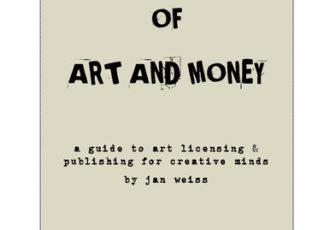
Jan Weiss, an art publishing industry insider and veteran of 15 years, has written a new ebook to help artists understand the world of publishing. Should you choose to license your work to an art publisher? What about self-publishing?
Jan is getting accolades already from other professionals in the field with her complete and easy-to-understand guide, “The Coexistence of Art and Money”. She has given us a sneak preview in the form of an excerpt from the book. Visit Jan’s site at www.theartplanet.com for more information and to order your copy!
Working with a publisher can be fabulous and frustrating and economically smart. You will need a serious reality check working with a publisher because nothing happens overnight. Instant success is a nice phrase but far removed from reality. Patience is key to your success as well as thinking long term.
There are advantages and disadvantages of choosing to work with a publisher. So let’s make a list:
Advantages
- Big budget.
- They do all the marketing
- They deal with legal issues
- You can create while they do all the publishing work.
Disadvantages
- Give up part of the royalty
- They can drop you
- They tell you what to do (this could be an advantage too)
- It’s takes a long time to see a return
Publishers are the ones making all the decisions about what to publish, when to publish and who to sell it to. You don’t get to control this however you get to make art and they spend the money to market it. Though you are leaving it in their hands you are also working with companies that have a long history (hopefully) and the know-how and brains behind the operation to figure out how to make money. If they don’t sell your art they don’t make money so it is of course to their advantage to sell it and then you get to reap the rewards by getting a royalty check. You will like that. I promise.
The disadvantages are simple. You give up a certain amount of control over your art. The publisher may give you direction and then you may be asked to revise it and maybe you think it’s perfect but they don’t. That’s the way the game plays. They aren’t perfect and the publisher may be going in the wrong direction. That’s why it’s important to have good communication with the art director. Don’t be shy about offering suggestions or reasons behind why you have rendered an image in a certain way. If the art director isn’t willing to listen you may need to rethink the relationship.
A publisher will usually work on a royalty basis so that you will receive a percentage of the sales. This percentage can be as low as 5% or as much as 20%. Make sure you know what this number is and are happy with it. A publisher may negotiate but there is generally an industry standard of 10% so expect that. Royalty payments are usually paid quarterly if a minimum royalty is earned.
If the publisher is not making any money on you they may decide to drop your contract. It is frustrating but they are making an investment and must believe in the investment. If that happens ask them to be candid and give an honest reason for dropping you. If you know why, this will help you in working with another publisher or going on your own.
Speaking of going on your own this is a perfect time to segue into the world of self publishing. Let’s begin with another list:
Advantages of Self-Publishing
a) Your own boss
b) Own direction
c) Own schedule
d) You get the whole royalty
e) Print on demand. You don’t have to keep inventory
Disadvantages of Self-Publishing
a) Getting the clients
b) Working alone
c) You are in charge of all bookkeeping
d) You have to do all the promoting and marketing.
e) You are responsible for having to pay all imaging costs such as scanning
If you decide to self publish the weight of everything falls squarely on your shoulders. That may be a good thing if you have business acumen and a realistic outlook. If you have stars in your eyes about becoming famous then you might not be ready or mature enough to take this on yourself. If you have had some measure of success in marketing your original art then maybe you can seriously consider self publishing. Because of internet access to printers and on-line galleries that world of self publishing has opened up. Years ago…it was nearly impossible to get a large print made. You either needed to order 1000 at a time or pay an arm and a leg. Not anymore. Many sites offer resources for you to upload high res files and order the print yourself or drop ship to a customer. And you do not have to hold inventory. When your customer order is placed then you send the files to your printer. This is referred to as Print-On-Demand. The time is right for self publishing. The major disadvantage you will find in this is that you do not have the marketing advantage that publishers have. They have the money to exhibit at tradeshows and have connections to major retail sources. You are free to exhibit at tradeshows and if you have the financial backing it’s an excellent way to get your art in front of potential buyers.
In later chapters we will talk more about social networking. This is key to marketing your art.
Self-publishing can be lonely. Join on-line art groups and connect with other artisans. If you live in a community with artists groups it might be a good time to join. Visit open studios to see what everyone else is up to. Listen and learn.


Print
Digg
StumbleUpon
del.icio.us
Facebook
Twitter
Google Bookmarks
Reddit
email
FriendFeed
LinkedIn
Tumblr


Featured Artist Leah Jay