by Carolyn Edlund
When artists tell me that online sales aren’t working, the problem is rarely the work. It’s actually an incomplete strategy.
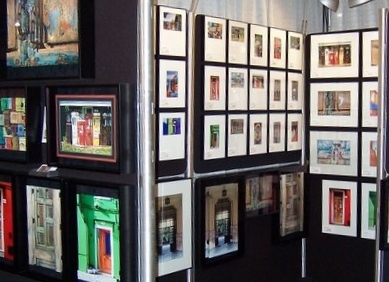
Selling art online sounds like a obvious solution for many artists. Just set up a website, add a shopping cart, post on social media, and wait for sales to roll in. I’ve heard this plan from artists over the years, and I’ve watched the same disappointment play out again and again. Sales are slow, or they may never materialize at all.
The truth is that this isn’t a failure of talent or effort. It’s a misunderstanding of how art is really bought. Even with the growth of online commerce, the vast majority of art sales still happen face to face. In a live situation, buyers can see and experience the work and connect with the artist.
If you want to understand why selling online so often stalls (and what actually leads to consistent sales) you have to start by understanding the essential role of selling in person.
Online art market reports confirm what many artists experience firsthand. Over the course of years, online art sales have grown. They now account for roughly 18 percent of the art market. But that also means more than 80 percent of sales still happen offline. Art fairs, galleries, open studios, pop-up shops, studio visits, and personal introductions remain primary ways for people to discover and buy art. This matters because it challenges the common assumption that a website alone can replace real-world exposure. For most artists, it can’t.
There are practical reasons for this. Art is experiential. Buyers want to see scale, surface, texture, and true color. They want to stand in front of the artwork and feel something. Online images flatten that experience, no matter how well photographed the work may be. Add to that the growing concerns about online fraud, misrepresentation, and the hassle of returns, and you begin to see why trust is harder to establish through a screen. When trust is missing, buyers hesitate. And that hesitation kills sales.
Buying art online is convenient, and this method works best once a relationship has already been established. Many collectors who purchase online do so because they already know the artist, have seen the work in person before, or feel confident in what they’re getting. That confidence doesn’t appear out of nowhere. It’s built through personal interactions, repeated exposure, and memorable experiences, which are best made in person.
What does this mean for the average artist who wants to sell more work? It means you must think carefully about how and where your audience can encounter your work in real life. Showing up in person isn’t optional if sales are a priority. Your goal shouldn’t be just to make a sale, but to make a memorable impression and build relationships with your customers.
Once a buyer has purchased from you in person, future sales—online or otherwise—become much easier. The first sale establishes credibility. It answers unspoken questions about quality, professionalism, and follow-through. From that point on, your website becomes a tool to view and consider future acquisitions.
One of the most effective and overlooked strategies available to artists is to focus on becoming known locally. It won’t work in every situation, but for many, it’s transformative. When people in your community know who you are and what you do, your opportunities to sell increase. Local press takes interest. Visitors seek you out. Word spreads. Your studio may become a destination. Your work gains context and meaning because it’s connected to a real person in a real place.
Visibility matters, but generosity matters too. Artists who contribute to their communities, through teaching, collaboration, or giving of their time, are remembered as neighbors and leaders, not just sellers. That reputation builds goodwill, and goodwill builds trust. Trust leads to sales.
This doesn’t mean you should abandon online selling. The strongest approach is a hybrid one. In-person selling and online presence work best as complementary channels. It’s common for someone to meet you at an event and then look you up online afterward. That’s exactly what you want. Your website confirms your professionalism, shows your latest work, and makes you accessible 24/7.
Most sales don’t happen at first contact. Instead, they happen after repeated exposure. Show up consistently. Let people experience your work in person. Stay visible in your community. Make it easy for people to follow up and stay in touch. They will remember you and seek out your work when they’re ready to buy. When you understand that selling art is about connection first and convenience second, everything about your strategy changes for the better.
The bottom line is that selling art online can support your business, but it rarely replaces the power of being seen, known, and remembered in person.
Carolyn, thank you for an honest look at online sales and what an artist can expect from these platforms. In my 25 years of maintaining a website, I have had few direct sales, and most of those from existing clients. I learned early on that it wasn’t my website’s purpose to make sales, but to provide a consistent place for people to find and view my work. I was far more successful in making direct sales from my email newsletter where I would promote my latest pieces, but again, that was sent only to people who were already aware of my work. Following the 80/20 rule, it seems that we should still be putting our limited energy into face-to-face sales opportunities.
It makes sense that your experience bears this out, but as you mentioned, your website’s main purpose isn’t to make sales, but to provide a consistent place for people to find you and your art. I can’t tell you how many people have spoken to me about their total frustration in trying to make online sales alone. That can work in certain circumstances, but for the most part, is working backwards. Live selling and building relationships is, and will always be, the gold standard for art selling.