By Carolyn Edlund
Imitation may be the sincerest form of flattery, but having your ideas stolen feels more like a punch in the stomach than a compliment.
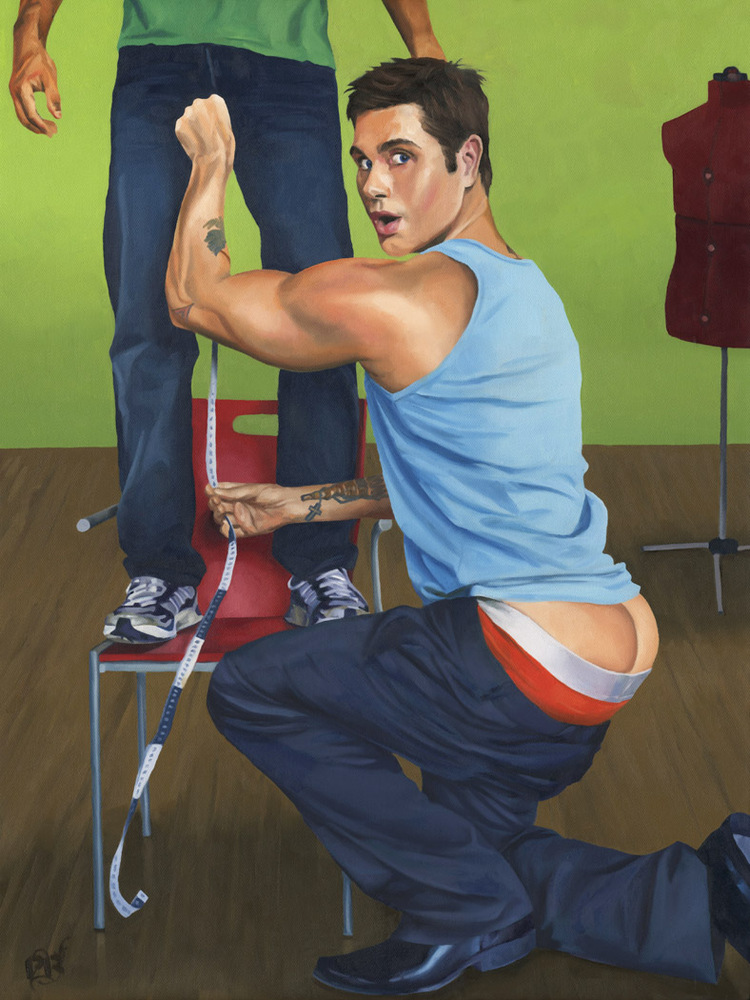
Courtesy Paul Richmond
What do you do when you have a fresh, original concept that gets picked up by others, manufactured overseas and sold at a price which undercuts yours?
These ripoff artists, an affront to real artists, often get away with it, simply because they can. You may have a copyright, but they may have lawyers and big bucks and be far away in another country. Standing up for your intellectual property can be hard, especially if you don’t have the resources for staying power in a lawsuit.
If you locate a domestic copycat, you can sometimes send cease and desist letters to stop them cold. Less scrupulous types may need more persistent threats from your attorney. But make sure you don’t cross the line yourself and get accused of harassment.
You can use Twitter to call out the corporate b*stards who started manufacturing your designs. This happened when Urban Outfitters ripped off and started selling necklaces identical to Stevie Koerner’s “A World of Love” line. When outrage goes viral, it can be satisfying. Especially when it hurts unethical corporate serial copycats who have to scramble to manage their reputations.
Another way to fight interlopers is to expose and shame them on a website video, often with humorous results, as Paul Richmond has brilliantly done when he punk’d Cai Jiang Xun for blatantly selling direct copies of his paintings on Ebay.
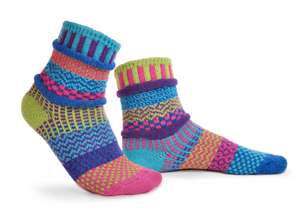
Courtesy Marianne Wakerlin
Here’s one effective method to keep and expand your customer base when being copied by others,. Distinguish yourself and your products and add value to buying from you as the originator. Marianne Wakerlin, founder and owner of Solmate Socks in Vermont, has done just that. Her popular mismatched socks and accessories are promoted as being American made and earth-friendly. Although her concept has been copied and made in China for a lower price, she isn’t overly concerned.
A statement of corporate and environmental responsibility takes up the whole inside front cover of her catalog. Marianne describes her family-owned business, which uses recycled materials, provides employment for American workers, uses renewable energy and works to achieve zero waste. Now who wouldn’t feel better buying from Marianne and wearing her socks proudly? Take that, polluting Chinese sweatshops!
Has your work been knocked-off, and how have you worked to resolve this problem? Please share your experiences, and results.

Suggestions: 1)Make it hard to do- do something so complicated, or labour intensive, or do it in such a unique way that it is very hard to imitate ie: if you hand stretch your canvases & hammer in tacks instead of stapling it makes it much harder for someone to do the same thing 2)Use special materials with custom recipes that are proprietary ie: I’ve been mixing white cement with 4 different hard to source aggregates which require alot of legwork to even find 3)Using even one expensive material can throw off the knock-offers who like to go cheap 4)Some ideas are too good to keep to yourself: allow some ideas to be used & don’t let that bother you ie:I share how to make artificial Trumpeter swan nests because I want people to copy that idea because I want Trumpeter swans to have something nice to sit on instead of ice in winter & the more nests that people make the better…By sharing that idea I am giving something to the community & that makes me happy…Not all copying is bad…
Sari, your suggestion of making something complicated or “proprietary” is excellent – in fact, just today when discussing this subject in a group the idea of “secret formulas” was brought up…it is impossible to keep your ideas from being copied, especially if they are different enough not to be a copyright infringement, and worrying about it excessively isn’t productive. I also like your idea of sharing your technique for making the nests!
Of course, none of that helps when images are stolen off the internet, which is how most of these frauds work now. I use an image search site to keep an eye on my stuff and to be honest, even if it IS stolen, there’s not much I can do about it without going bankrupt trying to legally pursue the matter.
As for calling thieves out on fb, twitter and the like, unless it draws some kind of major attention, me and my 200 friends (for example,) aren’t going to shame anyone out of anything.
Nice to meet you Carolyn…Thank you…You grabbed me with the mismatched sock company mention, who I became aware of years ago & who ultimately set me free from the notion that my socks have to match…(very liberating)…