by Carolyn Edlund
You spent years building a body of work and carefully choosing images for your portfolio. Then what happened to it?
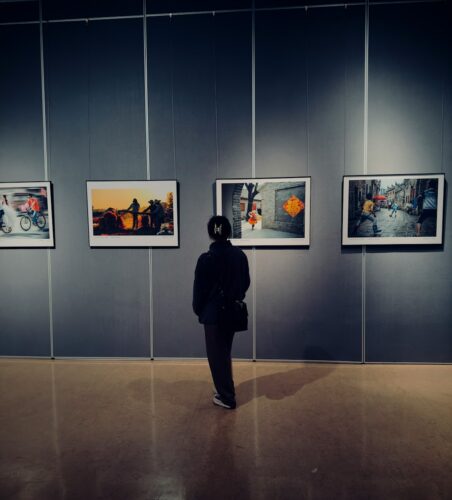
For many artists, the portfolio sits on their website waiting for visitors. It comes out when they apply for a gallery or enter a show, then goes back into storage. But your portfolio can do much more. When you have the right images and information organized and ready to use, you can create a presentation for the opportunity in front of you.
Start with a portfolio library
Instead of expecting one portfolio to work for every purpose, create a master library of materials you can pull from as needed. Keep excellent images of your artwork in high- and lower-resolution formats. Include detail shots, installation and exhibition photos, studio images and examples of commissioned work when they apply.
Your library should also contain current versions of your bio, artist statement and CV, plus press coverage, testimonials, videos and other useful material. And keep complete records for every piece: title, medium, dimensions, price, availability and any other details a buyer or industry professional might request.
Once you have these materials organized, putting together a targeted portfolio becomes much easier.
What does a gallery need to see?
A gallery owner doesn’t need to see everything you’ve made. A focused selection of 10 to 15 strong pieces from a cohesive body of work can communicate your concept, technique and direction without overwhelming the viewer.
Follow the gallery’s submission requirements, of course. Depending on what they request, you may also need an artist statement, bio, CV or exhibition history. Your job is to present enough information for the gallery to decide whether your work is a good fit for its clientele.
Give designers the information they need
Interior designers and art consultants may approach your work quite differently. They often search with specific requirements in mind, such as size, color, subject matter, price or suitability for a particular space. They need dimensions and availability. They may also want to know whether you accept commissions or can create related work in another size.
This is where in situ photographs are especially useful. A large painting shown above a sofa or a grouping installed in an office helps someone understand scale immediately. Consider keeping separate portfolio groupings for large work, smaller pieces or artwork appropriate for residential and commercial interiors. A busy designer shouldn’t have to search through your entire website to find six pieces that could work for a project.
Be prepared for calls and exhibitions
When you apply to a juried exhibition or other competitive opportunity, you usually don’t control the presentation. The application tells you what to submit. A well-organized portfolio library still saves you time.
Your artwork should already be professionally photographed, correctly labeled and available in the file sizes commonly requested. Keep your bio, statement and CV current as well. Then, when you find an opportunity a few days before the deadline, you’re not searching for an image, checking dimensions or rewriting a bio at midnight. Instead, you can relax because you’re ready to apply.
Create selections for individual collectors
A prospective collector usually doesn’t need a formal gallery portfolio. They may respond better to a small selection chosen specifically for them.
Suppose someone admired a particular painting at an exhibition. You could follow up with five or six available works from the same series. Or perhaps a collector who bought one of your landscapes two years ago would appreciate an advance look at new work before you announce it publicly.
Compare that with sending someone to your website and saying, “Take a look and let me know if you see anything you like.” A curated selection gives them a useful starting point.
Prepare for specialized markets
If you’re pursuing commissions, licensing, public art or another specialized market, your presentation should reflect what that buyer needs to see.
A commission portfolio could include completed projects, installation photographs, testimonials and a brief explanation of your commission process. For public art, you may want to focus on scale, materials, completed installations and previous project experience. Licensing prospects will often be more interested in collections of related imagery and examples of how your art could translate to products.
Before assembling any portfolio, ask a simple question: What does this person need to see in order to consider working with me? That answer should determine what you send.
Make custom portfolios easy to create
You shouldn’t have to build a new presentation from the beginning every time someone asks to see your work. Portfolio management platforms such as Artwork Archive can help you organize your inventory and create different groups of artwork for specific purposes.
Its Private Rooms feature allows you to select particular works, choose what information to share and send a private link to a gallery, designer, collector or other prospect. You can update those selections as work sells or new pieces become available.
Whether you use a portfolio management platform or your own filing system, the principle is the same. Keep your images and information organized so you can respond quickly when someone shows interest.
Put your portfolio to work
Take a look at the opportunities you’re pursuing right now. Are you approaching galleries? Building relationships with designers? Looking for commissions? Following up with collectors? Your portfolio should support those efforts.
You don’t need to show everyone everything you’ve made. Often, a carefully chosen group of relevant work makes a much stronger impression. Build your master library first. Then create several useful groupings you can keep ready and adapt when needed. The most effective portfolio gives the person looking at it enough of the right information to decide what happens next.

Speak Your Mind