Artsy Shark
A Site for Emerging Artists
Jan 26th
This article was originally published on The Arts Business Institute blog. Visit the ABI website for more information about the businesss of art, and an upcoming workshop in Philadelphia on February 18-19.
Do you know what makes your customers tick? Understanding the hidden reasons behind making a purchase will help you plan, market and sell more of your work.
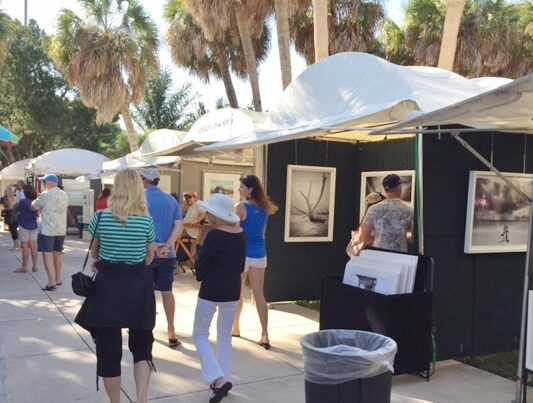
Before addressing why people buy your art, let’s take a look at who is doing the buying. So many of us think we’re selling to the masses, but that’s hardly true. It may look that way at most local art and craft fairs, but in reality functional crafts sell to only about 5% of the public at large, and fine art and sculpture sell to about 2%. Let’s look into the minds of this small slice of humanity:
The Dream, the Myth. People who pursue and buy art actually envy the lifestyle of an artist – or at least what they perceive your lifestyle is like. They are up at 6 a.m., dressed in heels or a suit, off to fight traffic and put in 8-10 hours in at an office. Your life and career seem like a fantasy they can’t begin to touch. Owning a piece of your work is like possessing a tiny bit of your creative spirit and soul. That’s heady stuff.
It’s Real and Authentic. In a society that’s rife with plastic, faux this and that, and “Made in China” stamped on everything, your work stands out as one of the most authentic things left. You have a skill – one that someday may be lost. You design and follow each piece lovingly and carefully through the creative process. And that’s why you must tell your story, on each hangtag and brochure and by word of mouth to every buyer.
It’s Local. What’s growing in importance to shoppers today? Spending and supporting local businesses. As our world grows more and more global, we all need that connection to home. A huge shift is taking place in society as citizens tie themselves, their loyalty and their money to neighbors, hometowns, local stores and people, and local artists.
It’s Different. Visit any mall in America, and your will see the same thing. Over and over. The same brands, the same buttons, the same colors, the same, same. What you, as an artist, offer is beyond the mall and the narrow imagination expressed there.
It’s Luxury. True, nobody really needs to buy luxury products, but it’s a common perception (and an advertising slogan) that we deserve it. Luxury is no longer restricted to the affluent class. The concept is greater than the product itself – it’s the “experience.” And making a purchase of a piece of art or fine craft is a blissful experience to many consumers who consider it a reward for themselves or a guilty pleasure.
The Message. Since only 5% of the world buys crafts, and 2% buys art, let’s double that audience. Add words to any piece of art, whether it’s on the surface, or a tag, brochure, in the packaging or on a mat, and you have effectively multiplied your customers. The “left-brained” shopper can now understand and embrace what you offer. You’ve provided an anchor of comfort, a translation of your visual language.
Is it Price? High or low, it’s never about price. Instead look at it as “value.” What is your piece worth, standing alone? What is it worth when infused with and accompanied by your story, your process, your signature, your fingerprints? Can the customer hold your talent and soul in their hands? Why, yes. Yes, they can.
Function or Non-Function? All art, whether it’s a ceramic teapot or an oil painting, is functional. No one reaches into their wallet if they don’t have a purpose or use for their purchase. It’s more than love or adoration. Your artwork fills a void, brightens a space in their home or their heart. The more you discover about the “function or purpose” you add to a customer’s life, the more you will sell.
Jan 24th
Like so many of my fellow artists, I began my art career at an early age. First working with pencil and rapidograph pen, and eventually moving into watercolor and acrylic.
Sixteen years ago, I was fortunate enough to move with my husband and twin daughters to Monterrey, Mexico. Once we were settled in, I began watercolor classes under a couple of well known local artists. That was the beginning of my love for bold color combinations and puzzle-like compositions.
Much of what I paint reflects the scenery found in my southern surroundings. I love painting the old rustic doors or windows found in the small villages outside of Monterrey. In “Window from Santiago”, I tried to reflect the beauty in the worn out color of the cobalt blue, and the years of weathered stucco.
I am also influenced by the many trips I have taken, like the bus ride to San Miguel de Allende. That was an adventure I will always remember with great humor and humility. It produced this painting, “Early Morning San Miguel”. The scenery of this portal is commonly found around the town square of many small towns. I loved the way the light was pouring through in the early morning hours.
Being challenged by nature and the beauty found in the desert, I enjoy painting the contrast between the dangerous looking cactus, and the delicate flower it produces. It was around this time that I began painting in series. This is “Spanish Dagger III”, out of a series of five paintings.
I also have an ongoing series of paintings called, “The Talavera Twins”. These little charismatic characters are a special project I’m working on and are geared toward the licensing industry. Each playful composition is a reminder for me of my twin girls, who have relocated to the hill country of central Texas.
I am currently working on increasing the size of The Talavera Twins collection and pursuing licensing and/or an agent interested in these cute little characters. I divide my time between my studios in south Texas and Monterrey, Mexico, always being inspired by the scenery along the way.
Jan 22nd

Lesley Riley is an internationally known artist, teacher and author with a passion for spreading the magic of art. While she likes to make things, she now devotes her time to making things happen for other artists through her company, Artist Success. Lesley provides resources, creativity management, coaching and mentoring to artists, enabling them to achieve their vision of success.
AS: Lesley, you oftentimes work with client on their mindset and thinking about the bigger picture of what they can achieve. What does that mean?
LR: Any artist can have the kind of success they dream of, but so many believe that it is an impossibility or out of their reach. That’s called thinking small and is a result of self-limiting beliefs. What holds many artists back is acting small. Taking the actions that propel you towards your dreams are often difficult and scary and the process seems overwhelming. There are so many things that hold your back – confidence, courage, know-how, commitment and self-worth. I help artists see what’s possible and then we work to break it down into doable steps.
AS: What do you find that artists struggle with most in stretching themselves to grow their businesses?
LR: Discipline. If you don’t treat making your art as a job, then it becomes your hobby. You cannot expect to make a living or grow your business with a hobby mindset.
Having a successful career as an artist is no different than working 9-5 at McDonalds or a desk job. You show up and work in order to keep your job so you will get paid. Being disciplined sounds counter-intuitive to creativity, imagination and artistic endeavors, but it really is the key to creating the success you desire. Show up in the studio on a regular and consistent basis.
To make success happen, you need a plan, a marketing plan. And then you need to take consistent action on that plan. Lack of time is not an excuse. Small blocks of time add up to success. I know. I built my art career with 5 children at home and an almost full-time job.
AS: Galleries are closing and the market is getting tougher out there. What recommendations do you have for artists who want to increase their income?
LR: My recommendations:
AS: Please tell us about your speaking engagements and your workshops.
LR: I speak to groups and teach 1 and 3-day workshops based on my Artist Success Action Plan (ASAP). If you haven’t realized it by now, taking action is the key to success. Just as I do with my private coaching clients, I break down the necessary steps into accessible and doable actions, add in the mindset and guide artists towards achieving their personal vision of success.
Jan 20th
I was born in Whittier, California in the same year that Michael Jackson adopted the Moonwalk. I was raised in a conservative Mormon household and was a very obedient child. As a result, a large part of my self-perception became based on obedience and self-control. As I’ve gotten older I’ve adopted a different belief system and learned the virtues of rule-breaking, but that obsession with self-control that I espoused as a child is still apparent in most of my work today.
At an early point in my professional life I realized that I was going to have to make the choice between having a dependable source of income and doing what I loved. After determining that money meant less to me than happiness, I settled in Salt Lake City, Utah , chose to pursue illustration and have yet to regret it.
It is hard to put your inspiration into words when you yourself do not even know where it comes from. Mormons call it the Spirit, Romantic poets called it the “divine winds,” Freud called it the subconscious, but anyone who’s ever been touched by it knows that there really are no words for it. Rather than look for inspiration, I look for avenues through which I can connect to that it; things that remind me of lives I may have lived or people I may have been. Most reliably, I find that connection through things like taxidermied animals, traveling carnivals, and vintage photographs from the turn of the century.
My work is largely based on narrative. Each piece is a short story told through various subconscious symbols, some more obvious than others. A lot of the thematic elements in my illustrations come from personal experience but I try not to make a conscious connection until the piece is complete, otherwise I find myself forcing the drawing and it becomes difficult to find the inspirational space for it to fully develop.
My training as a photographer heavily influences my creative process. Once I’ve discovered a theme, I immediately start constructing the scene as if it was a photograph. I mentally configure light sources, composition, and angles until the three-dimensional idea translates into a two-dimensional drawing. I think in values and layers, using detailed cross-hatching to block out light from the shadows.
I am currently working on a multitude of projects for upcoming shows, including a collaborative project with photographer Gregory Shearer. Greg’s work focuses very heavily on place so together he and I create pieces that inhabit his carefully constructed spaces with my somewhat somber characters.
I don’t really set specific artistic goals for myself outside of just meeting deadlines, but if I had to put my motivation into words, I would say my goal is to create a connection. There are places inside of a person that no one else can possibly understand and about which I could never communicate with words. But I believe my drawings are an attempt to connect those hidden places in myself to the hidden places in the viewer, to somehow create a bridge of communication over the immense expanse of our differing perceptions, languages, and experiences.
Jan 18th
By Carolyn Edlund
Now, go out there and rock your art business this year!