Artist, author and former gallery owner Rhonda Schaller gives an insider’s view on how to sell your work in New York art galleries.
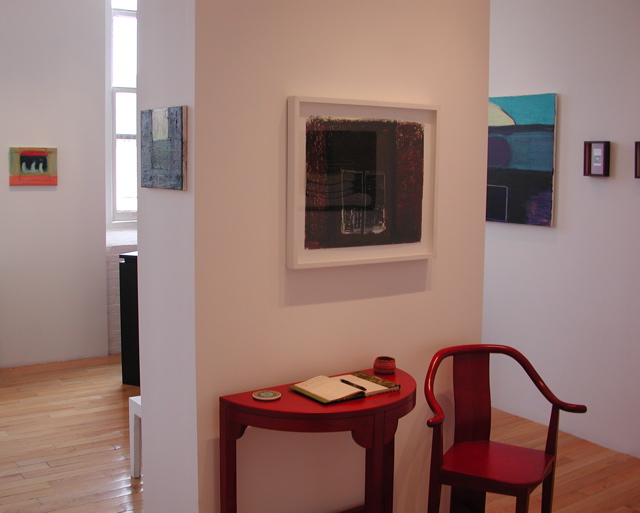
I want to talk with you about the New York City art world and how to stake out a career path as a fine artist. The art world is a market- driven business, like stocks, like real estate, like most commodities, and it is changing. As is the entire world market for art. Everything is in flux right now, as would figure given the state of the global economy and the changing face of all commodity based enterprises.
Based on my research on the art market, what I have learned from reading established dealers like Ed Winkelman who has a great blog, my own experience as an alternative New York City gallerist, and as a successful working artist for the last 26 years, I have collected information I would like to share with you.
I became fascinated by art dealers in 1998 when Holly Solomon, the late great contemporary art dealer made her first visit to my studio. Before her death a few years later, she and I would shop at Issey Miyake and go for chicken soup, and talk about art. I was 40 then, the same age she was when she started her gallery. She taught me a lot. What I learned from those talks I applied, and that wisdom has helped make my self-produced career both fulfilling and meaningful.
I have found that art schools do not teach how the art world functions and what you – the artist – should do. Or what you need to know. Even if it – the market for art – is changing, and in my opinion, new models need to be created – you need to know how it has worked, how it works currently, and then you can make choices that fit your aspirations and goals.
Artists do not know the difference between self-producing and working with a commercial art dealer. Many artists do not know how to get their foot in the door in either world, and if it is the right foot or right door for them (so to speak).
So, this is what I have discovered in my research and in my life, about how the commercial art world works, at least for now. Is it for you? Lets dive in.
- Setting career goals
- Dealers vs. self-producing
- How NOT to get a gallery
- Steps to build your career
Set Your Own Career Goals
You can have a successful art career, be reviewed in magazines and newspapers, be featured in online Webzines, and create and contribute to blogs. And you can have a core of dedicated collectors, and find new buyers, be collected by public curators for permanent collections and make a living with your work.
You can apply and receive grants and funding for your projects. And you can do all of this, support yourself with your work without a commercial New York gallery. You can also be successful if you are represented by a New York commercial gallery or a series of galleries regionally, and work together with a community of like-minded artists or a dealer in the commercial art scene to pursue your dreams. There is no one way to be successful.
You do need to set your own goals and have a vision of your own career. That is the key. Then, you can create the right strategy of next steps to manifest that vision.
Relationships: Dealers and Curators
Art Dealers are a part of the art-as-commerce equation. Curators are part of the art-as-education equation. Artist-run galleries, Co-ops, alternative spaces, juried shows, and the Internet are making it easier for artists to find a market on their own. It comes down to relationship building. It takes time and effort, but it is the most important aspect of being an artist.
You will need to build relationships with one or more of the following: dealers, curators, collectors, critics, friends and family who will buy your work, and other artists – throughout your career.
Some artists who operate outside the art world structure have a harder time ending up in museum collections and private collections, and the dealer is the main contact to enter into established public collections. I have found it satisfying to create relationships with Museum curators and collectors directly as an artist, and have found my way into their collections through those relationships.
Newspaper reviews are egalitarian, and self-producing artists can find their way into the “public” press easily. Online Webzines and blogs are great ways to get the word out about your work as well. However, a commercial gallery can provide additional market opportunities beyond what an artist might find on their own. A dealer can help raise prices if they have a strong collector base, and that is nothing to sneeze at. And, if they have a decent advertising budget, can create higher audience traffic through well placed articles and more reviewer opportunities with art magazines. This can lead to higher price points.
Being Self-Produced vs. Working with a Gallery
The advantages of working with a commercial gallery in my view can include:
- Reviews in major art magazines
- Larger audience and higher prices
- Easier access to senior curators who control purchase awards for museums
- Greater likelihood of high volume sales
- Feeling validated as an artist
But the disadvantages can include:
- Finding a gallery who will work with you in the first place can be a dispiriting adventure, ego deflating and down right frustrating and demoralizing
- Once you get a dealers attention, it can take years before your first show
- Making enough money to split with the dealer
- Not being allowed to take creative risks in your work
- Not being able to deviate from a style that is selling well
- Being locked into a relationship and a showing cycle that is unfulfilling
Working with a commercial gallery does not mean they do all of the work for you, that they make you a star, that you are set for life, or that you still don’t have to pay out of pocket for advertising or other show related costs.
It is a business partnership, not a supportive family. Be mindful of your ego here, and the need to say “ My dealer says…blah, blah, blah..” at parties or to your fellow artists to validate your artistic identity.
Now, the advantages of being a self-produced artist can include:
- Control over your exhibitions and what work you show and where
- Tailoring your market message for your style and changes in style
- Ongoing dialog that can support your work with alternative or fringe folk
- Not sharing the proceeds of sales and choosing your price point
- Deciding how often you want to show
- Not being locked into one space or one city or one style
- Independence in creative direction and installation freedom
- Being your own boss and an entrepreneur
The disadvantages:
- Having to work at creating, promoting, marketing, funding, etc..
- Creating a marketing plan and sticking to it
- Sustaining a creative business on your own initiative
- Maintaining your studio practice day to day
- Handling the finances, budgets, sales tax
- Being your own boss and an entrepreneur
Both have advantages, both have disadvantages. I hate being told what to do, so I love being a self-produced artist. I have loved being a gallerist (non-traditional) and choosing the artists I promote. The key for me has always been control of the message, control of the medium. You have to find what works for you.
If you choose the commercial gallery route, what NOT to do:
Stop sending unsolicited jpegs and slides to hundreds of galleries that you do not know. Stop sending unsolicited emails with jpegs. Never send unsolicited packets in the mail. Stop going into galleries with a CD or your portfolio in hand and asking them to look at it, and being insulted when they say no. STOP. They will not discover you that way, believe me. I know.
When I had my brick and mortar gallery on West 27th street in Chelsea, I would get 1000 unsolicited submissions via email every year. I still get them, and I have moved my gallery to an online format. I DELETE THE UNSOLICITED SUBMISSIONS. Not because I am mean, I am a motivator, a gallerist who loves emerging artists and helping others. You can read what some of the artists I have worked with have said at Linkedin (click on “view profile” to read the recommendations).
I will not look at unsolicited work unless I have posted a call for submissions on my gallery website, and neither will most other dealers I know. Why? Because they are busy positioning the other artists they have already made a commitment to work with. When I have the time to look at art work form artists I do not know, I state it up front. Then, I look, I comment, I curate, life is good.
Most artists send out unsolicited emails with urls and jpegs hoping a dealer will see how wonderful they are and discover them. But you must be more targeted in your approach if you want a dealer to really consider your work. Know who you are the right fit for, and who is accepting submissions.
You should choose the gallery that’s right for you by carefully studying their curatorial ideas and exhibition program to make sure it is a good match for your work.
Do not send submissions to a gallery that you have never even been to. Visit the gallery many times during the season, look at different shows they host to make sure their curatorial style is the right fit for your work. Visit their website and review the shows they curate, and the lists of artists they have exhibited. How do you compare? Style, level of success, medium, etc… Is the gallery accepting submissions at this time? You must know this in advance, before sending your “ I am an artist looking for representation” email, if you want to seriously be considered for a show.
So, here are the steps I would suggest you take first, in this order, before sending out all of those mass emails to the hundreds of galleries on your mailing list:
Steps to Take to Build your Art Career
- Build a supportive network
First off, you can’t do this alone. Working in your studio is a lonely business most times. You need a community. I tell my students and my clients to hang out with passionate people, other artists, visual, writers, poets, performance artists. Anyone who inspires you, understands what you’re going through, and will share opportunities that they hear about with you should be a part of your personal network.
You need a community of other artists in your life. You need a network. Because making art is such an isolating business, you have to make sure you are not all alone in it. We need inspiration from others. We need to see what is going on in our field, and build relationships. The world works this way. All business works this way. Artists need to learn to work this way too. Networking and researching should be what guides your career from the business side. You job is to build a bridge between your creative mind and your business mind.
- Get your work online and in artist registries
I love online art files. This is where I have looked for artists to add to group shows I have curated. I like to discover artists on my own. Many dealers do as well, and everyone does it a little differently. I like the curated slide registries too, though some are open to all artists. Many independent curators look through these online art files and registries and this can lead to group exhibitions and other opportunities.
You can research these on the internet and they are a great way “to be discovered”. There are physical registries housed at non-profit arts organizations or on their websites and purely online registries. Work with the ones that you feel an affinity towards. The important thing here is to have your work “findable”, digital and online, out in the world, out of your studio, available for others to see when they are researching for shows.
- Take a business course for artists
In many cities across the county there are arts councils and non-profit arts organizations that offer business classes. Some may even be in how to be an artist and create success. The Creative Capital Foundation has a great series of professional development workshops. In addition, I would suggest you look for how to be a freelancer, how to run a small business, etc.. Look for these type of programs in your community, you will meet like-minded folks, and fulfill the first step of forming community.
You will benefit greatly from learning the “business” of running your own business and make no mistake, art is a business. Any professional practices class will be helpful, and many are taught locally. There are also creative career coaches and mentors for hire. Invest in yourself and get the knowledge you need to launch yourself properly.
- Get out of your studio and into the world
Organize an exhibition at your library, write reviews for a blog, intern for an art handler in a gallery, work for a museum in any department, work for a gallery and serve wine at the openings, teach an after-school class in art, join an artist support or crit group, start an artist crit or support group, go to artist salons, go to lectures, go to openings…. Meet people, and see what is going on in the “scene” you want to be a part of. I met some of my best curatorial contacts while being a security guard at MoMA when I first got out of art school.
- Set your goals
Think about what your career goals are as an artist. What is your potential market? Where do you think your artwork belongs in the art market? These are very important questions, so take your time coming up with the answers. No one knows but you.
Then decide how you will self-produce and/or go after a commercial gallery. Begin to write down a few long-term goals and a series of short-term goals to help you match your art work to a prospective market. Do your homework – where does work in your style, artists with your aspirations, and dreams show? Who is your audience or potential audience? Where do they hang out and who do they collect? What is the best way to reach them? Which galleries cater to this audience?
- Create a strategy
Once you have your goals set, now it is time to create a strategy to reach those goals. Research your potential market. Understand what your potential market is like and find the spaces, alternative or commercial, that offers you the visibility to target that market. This takes work and research but will pay off your entire career. Research is drudgery, yes – but without the research you are flying in the dark. A targeted search is the key to your strategy.
- Stretch the limits of your market
Be creative in determining venues for your work. Your potential market can include juried shows, open calls, artist residencies, public art projects, guerilla art happenings, art fairs, art salons, coop galleries, commercial galleries, University galleries, and Museum collections and biennials.
- Be selective with commercial galleries you target
Established galleries that work only with proven sellers in mid-career will not be a good fit for emerging artists. Some galleries define an emerging artist as anyone who has not had three Museum monograph shows! Know exactly where your work falls within the art world of prospects you are cultivating. If you make spiritual abstract paintings like I do, then don’t approach galleries known for sculptural installation videos. Unless you have talked to the dealer and they are looking for abstract painters.
There will be more than one gallery for your “prospect list”. Many will be good targets for you. Know who you are marketing your work to, and who you have defined as your personal market. Spend months visiting galleries and websites looking for the right fit. It will be a great investment of time. Then gradually narrow down the galleries that are in line with your artwork and market.
- Create a prospect list
Work toward a short list of galleries that are a good match, good prospects for your work and begin to network. Now networking does not mean blind self-promotion. It means relationship building. How do you build a relationship? By not talking about yourself when you go to the galleries you are interested in.
Strive to create relationships with those galleries, the artists who show there, the folks who work there, and the dealer or studio managers if possible. Have conversations about the gallery, not about yourself. When you visit or email them, talk about the show. You may not gain initial access to the dealers, but in some galleries you can.
I tell my students and my clients all the time: It is never about you, it is always about THEM. That is the key to making the sale, the introduction, maintaining the relationship. They don’t care about you yet, so don’t expect them to.
- Create a Relationship
Creating relationships means learning to listen generously. Ask questions at an opening, or an event, or a party about the current artists show, about the gallery, and show that you understand what the dealer or staff are trying to do. Let them know that you like it. Do all of this before you broach the subject of your own work. Have a few conversations before you introduce yourself and your own work. You will get further. Better yet, wait for them to ask “are you an artist”? Then simply say “yes”. Wait…breathe….let them ask more questions, or share the comfortable silence that ensues.
If you come across as not wanting anything, you just might be in a position of being asked to talk about yourself. If you come across as “I’m one more needy artist looking for representation” guess what? They will tune you out. Now this may sound harsh, and I’m sorry. But it is the truth as I have experienced it (as both a needy artist and busy gallerist), and my point here is to share with you what I have learned in my 51 years around the sun!
Now if you are still feeling a little insulted, or miffed at me, I understand. But I’m being as honest as I can with you. Since I wear both hats – artist and gallerist (and collector too truth be told), I feel like I understand both the dealers side and the artists side of this emotionally laden equation.
You cannot force this relationship to move very fast, unless you come recommended by a very wealthy collector who knows the dealer well (which is how I got Holly Solomon to come to my studio). And even then, it is a process, and it is going to be a slow growing, research laden, cultivated relationship.
That might mean in practical terms, offering an insightful comment about the current exhibition or asking about an artist in the program you like at the galleries you are targeting. Always say something positive about the current show or other artists in the gallery. And build these relationships over time.
- Build on the relationship
There will come a point when the gallery dealer will ask if you are an artist and what kind of work you do. At that point let the gallery know what you do, why you do it, and that you’re interested in having them consider your work. If they say “Get back to me in a few months” or “Stay in touch”, which is quite typical, then do that. It is up to you to follow up. A friendly note works well, remind them of something they said to jog their memory, and that you’d be interested in their seeing your work. Ask if they have a submissions procedure, or if they do studio visits, and if they have the time to look at your work.
Pending their response, follow up with a few jpegs and/or point them to your website. The key at this point is to tie it all together: 1) demonstrate that you understand the gallery mission; 2) make clear that you enjoyed the conversations you have had up to this point; (and that they like you – people like to work with people they like) 3) THEN suggest that your work seems like a good match for them. Would they consider looking at it now? Let them pick how they want to look at it and when.
- Create a Visibility Plan
So, after you have made the jump and actually asked the gallery to look at your work and consider you, don’t stop with just that one gallery. Make sure you are reaching out and building relationships to all the galleries on your prospect list – aim for ten. The numbers will work in your favor. At the same time, build your PR. This is vital, you will be Googled! Do you have a blog? You should. Join the conversation on the internet, comment on others blogs, attend openings and professional lectures.
Be seen, be out there, be knowledgeable about the world you want to be a part of. Know what is going on. This will give you more opportunities to make conversation, and you will probably even have fun, get inspired, and feel motivated.
Look at all the empty storefronts in your city – and produce exhibitions in them. There are some great organizations doing that all over the country. Join one. Start one. Be flexible, be creative, be noble. Join with other artists who are doing interesting things in this changing art market. Form micro-market initiatives and market yourselves – get visible, get busy, promote yourself and get out there!
That’s a great way to build momentum and credibility. While gallery shopping, you are producing and building a reputation. Diversify your efforts and keep the galleries updated on your success as it builds.
Artists need to approach creating their art career (which might include getting a gallery) with the same strategies they would use for looking for a “straight” job. Self-assessment, targeted research, planning a visibility campaign, direct contact based on research, networking their way in, working with curators/reps/agents and answering ads/ calls for shows, etc… A mix of tactics produces the best results.
The key is to find a gallery that’s a good match for your art and aspirations, understands your work and believes in it. Your goal should NOT to be to find any gallery at any cost. You are a vision-maker and you deserve the right outlet for your vision based on good solid business principles.
I firmly believe that society needs its vision-makers. Both the art itself and the artists who make it, to express and lead the renaissance that will rise from the current recession. “There can be no Renaissance without a focus on art in all of its many aspects.” So, don’t give up.
The steps I’ve outlined in this article should help, and remember – you can do it!
Rhonda,
First of all I wanted to thank you for your comment on the previous page, but, then I was lead to your article. I want to thank you for all of your advise. Artists really need to have a guiding voice in such a complex marketplace.
Best,
Jason
Thanks for your kind comment.. I will pass this on to Rhonda!
Thanks for taking the time to write this lengthy and thought provoking post. I’ve bought books on the subject and not come away with as much good advice as given here.
Roberta,
Thanks for leaving this comment. I agree that Rhonda has a great wealth of information. She will be joining Artsy Shark at a later date to be guest blogger again. Stay tuned!
Great Article…. Rhonda, you are a generous soul to share this information. You are right on about the PR angle too… I’m a PR consultant as well as an artist! I’m going to post a link to this on my blog.
thanks
Thank you Rhonda. I just wish I had read this 10-20 years ago! There is so much business that goes hand in hand with being an artist. It is learning how to do the business end that is so important and that is the part I really have never learned. I live in northern Minnesota in the woods..no galleries and no artists who can teach me how to do all the things I need to know. I received an invite to have a showing in a gallery in PA…but the requirements were over my head…I have never done a big show…do not know what to do or how to begin. I had to say no as I had no idea where to start and no one to turn to to help me. If I could have learned all of this at a younger age it maybe would have changed me life…so I am glad you are telling it to all of the artists so that they can learn what is required…having a heads up is worth everything. You are doing a wonderful service to many…thank you for taking the time to do that.
Thank you Rhonda for this invaluable information!
i love your straight talk style — you have shared your wisdom with compassion and ego-free honesty. many thanks for passing on words of guidance for finding one’s way through the thicket of the art world(s)!
hi rhonda – not many people would take the time to put forth for all interested parties to access such an organized and insightful approach to growing as an artist and developing a career.
you are very special and I feel very fortunate to know you.
Rhonda has been immensely helpful to so many people, and I am honored that she has agreed to join us at a later date to be guest blogger again. My recommendation to her is “You might want to write a book”!
Excellent, clear, and compassionate article about the real art world that I will recommend to artists and students! Thank you Rhonda!
Rhonda, thank-you so much for such a comprehensive and downright practical post!
Demystifying the professional art world for artists taking their first steps – at any age, not just straight out of college! – is soooo needed.
I found this post both inspiring and empowering and my takeaway is “Any One Can” – if they feel passionately enough about their work and are prepared to apply these principles consistently to get that work out into the world.
Woo-hoo!! Now we just have to get on with it!
Thank-you!
I needed so many answers and I finally got them! I just recently learned about vanity galleries and turned down the so called offer! Those should be mentioned too and all the scams out there for vunerable artists who need a ego boost. Well, I was really naive but now I see things clearly thanks to you! I def will approach galleries differently and do more research, possibly field journaling for my degree too. Everything was very helpful, inspiring and your blunt approach is a must for this topic.
Thankyou, very much apprietated!
Hi Gabrielle,
Thanks for you comments, and I’m glad this blog article was helpful. Your point about scams and vanity galleries is well taken, and yes – they should be talked about too.
What comes to mind is how hard it is to be an artist, and to want to be “out in the world”, no matter what the cost or opportunity. To think about art as a business, to wear 2 hats, a creative hat and a business hat is necessary. When wearing your business hat, it is a good rule of thumb is to consider what is the return on your investment. It is called ROI – every business considers it. We need to as well.
Will the particular show, the fee you pay, be an investment in your career. It always comes down to what does success mean for you, and then weigh every investment against it.
Anyway, you got me thinking – thanks. More to come…
This article was straight to the point delivering the clearest vision of the real inside. Great info and inspiration! I couldn’t be more grateful to have found this today, Thank you so much for writing this!
Thanks Micci,
Glad you found it helpful. I’m writing another article for artsyshark on creating an exhibitions strategy for alternative spaces which you might like too. Stay tuned….
This has been so helpful! Thank you>
First of all I would like to thank Victoria Ryan my friend on LinkedIn who commented on this blog and liked what you had to say, (hence my finding Artsy Shark). Rhonda, excellent article, (more on this in a minute.) Carolyn, your blog Artsy Shark, is an excellent source for information on how to market you work as an artist. Carolyn, your efforts are much appreciated! There are a lot of bogus, self-serving, social media experts out there who are clueless about marketing. The fact that you have gotten Rhonda to share a few thoughts based on her experience ( real life, I might add ) give you, your blog and efforts credibility. I have been looking at LinkedIn to see if I can find some viable, relevant and meaningful information and develop some key contacts in my fine art marketing efforts. This blog by far is the most on target that I have been able to find. Keep up the good work, we need patrons like you! Rhonda, well said. The diversity now available to artists via the internet, and social media have opened up new ways for artists to get the work and the word out. Finding your audience is key as you mention. I totally agree, whatever work you are producing find galleries, contacts, outlets, events, etc. that share the same sensibilities, look, style and tastes. My best to you all, what a nice way to start a Thursday! Many thanks. John
This article is awesome! I ran across it in the top 10 list for 2010. Can’t believe it missed it over the course of this year. Thanks for the wonderful info 🙂
You are so welcome Chris. As artists, we need a break – we need to share, we need to create new models of doing art and doing business, we need each other.
We can all ask ourselves “in what ways might I…..” and fill in the blank in authentic ways, and everyone gains!
Happy new year to all.
Lengthy article, and I admit I skimmed the lower portion.
Rhonda, thanks. I think that you are using the term *self-produced* the way film/TV uses the word producer–as in you find your own art shows or marketing? It would be nice to get a definition.
I agree with much in this article, but disagree regarding email submissions. There are art consultants who own galleries that have accepted artist from email submissions. I know because I made the submissions on behalf of the artists. There are many art consultants who prefer email submissions. Email submissions are becoming the norm in making submissions to editors of art magazines, art licensing firms and art consultants.
I read a survey today that 83% of art professionals (in areas named above)now prefer email submissions. There are gallerist still respond to email submissions when the approach is professional and well crafted and the jpegs are properly labeled.
Hi Marie,
Thanks for sharing your research and experiences, so glad these approaches have worked for you.
I think E-mail marketing is a great tool for art consultants, art licensing firms, magazines and art buyers for sure. As long as artists do their research and target their promotional campaigns to the right audience, it is E-mail marketing is a proven way to gain new clients, and very effective.
Established gallerists in NYC are a whole other breed in my experience. Glad you have found some who will take email submissions. Again, artists have to research who does and doesn’t and follow instructions. The authors of Art/Work Heather Bhandari, who runs Mixed Greens Gallery, NYC and Jonathan Melber from Jen Bekman, NYC polled over 100 gallerists/art dealers in NYC and email is really not the way to reach out. Here are their top ten ways gallerists find artists, which I think is worth it’s weight in gold – am happy to share!
1. Artist Recommendations
2. Curator Recommendations
3. Solo or Group shows
4. Art Fair
5. Slide registry or flat files
6. Submissions/Open calls
7. Other recommendations
8. Social event
9. Open Studio
10. Juried show
It’s just a good rule of thumb for artists not to go door to door with a portfolio under their arm asking if a gallery has 5 minutes to look at their work. Find out who accepts submissions and when, and do not send unsolicited requests for representation.
Hello! great article! I really appreciated the input. It was funny because I was again feeling the drive to bust my head against the gallery wall…and in my search YOUR article came up first. Following the spiritual impulse I clicked and was thankful for your input. Like you, I believe I am a bit more free flowing, creative and independent as an artist (I have been a professional artist ever since grad from Pratt in ’94) BUT reaching clients that collect fine art would really increase my living; (I currently do all custom tattoos for the most part.) WHAT I Would like to know is how YOU went about creating your own independent shows and sales. In your article you discuss the benefits of being on your own but then describe ways to go about achieving a gallery. What are your suggestions on how do I achieve collectors with my FINE ART? I have quite a few ideas and based on your article will implement some changes & follow through; however I am looking for a few suggestions on how to jump from tattoos to selling my many original art series to collectors? Please take a look at my website http://www.DGWILSONART.com and you will understand what I mean. I have many series of art that I have been working upon in the last couple of decades while writing books, illustrating & publishing them, have a full clothing and print on demand line of art, as well as can do many other things such as portraits, landscape paintings, jewelry that is very unique (Tattoo Toolery) but my most favored series are the Ink Blots, Bonsai in Nature, and the Industrial series. So specifically HOW would you recommend I proceed to sell my fine art to the public that are not getting tattoos? Thank you so much for your time and great article. I will continue reading your blog and the other blogs you recommended. Again, I appreciate your spirit.
Im ready. great to read.
You do have an interesting, useful and inspiring website. I have never gotten anywhere with local (Seattle) museums or commercial galleries. Thought I might try New York. Why not. Of course you have given me some “why bother’s.” It would be great if you could look at my website and let me know if I should bother. If you don’t have time I understand.[img]undefined[/img]
I really like Rhonda’s points. For the most part she is bang on.
It takes time to build a strong career as an artist and certainly getting out into the world is good for your business ……and more importantly…it also helps shape your artistic “core” as well.
Deryk, you have landed upon one of the most-read articles on this site. Rhonda does have a great wealth of knowledge and experience as both a gallerist and an artist.
You are right – it takes time. And, networking, good planning and making sure you are at the right place at the right time!
Great comments everyone, thank you for continuing to read this article and share your experiences and thoughts.
The hardest thing for an artist at times is to figure out for themselves what is authentic, what is their value in the art world or marketplace, (and even if that matters to you), who is your market and audience, and the age old favorite – how to persevere.
Being a shining light a beacon of creativity, making products or images, and then having a conversation through your work to an appreciative audience takes a business mind. To do that, you need to research the venues and build your visibility – then try to come to NYC (at least in my opinion). Aim for alternative spaces, regional spaces, international spaces, Museum and University spaces. I would do that way before the commercial gallery world. That world is a scene and its social and its about so much OTHER than your work.
Hope that helps everyone.
Happy summer, Rhonda
This article is so full of inspiring advice that I am going to print it off and reread it over a few more times. Thankyou for posting this Rhonda.
You are so welcome Kenneth. Glad it was helpful.
Best,
Rhonda
I have some art work which I am told is more for the commercial world How do I go about looking into this any comment welcome
Jan, if your work is appropriate for corporate clients, you might look into working with art consultants, who often deal with architects, interior designers and even building managers. See this article for more information http://www.artsyshark.com/2010/11/24/how-to-work-with-art-consultants/
I really enjoyed this article. You say it like is; I’ve been in the art business since the 70s, and what yous say is true! Thank you for sharing! James
I’m so glad, thanks for the feedback James. I wrote this article a long ago, and it’s still timely. We need new models in the art world !
Rhonda, type my name, James Guentner, on a Google search. When a page comes up click on James Guentner fineartamerica. You can see my art work. I just like sharing it it. Thanks
Thanks James – sharing is always good.
Dear Rhonda, i’ve been doing research on the art market for qute a while, and i must say your article is the most informative, reasonable, helpful and honest. Unfortunately they don’t teach this in the art schools, and almost every artist is struggling in the art world ocean in desperate need for help or at least some guidelines. Thank you so much for sharing your experience! 🙂
Victoria
Thanks Victoria – glad it was helpful. We all go through so much, create so much and care so much. Through the sharing we grow stronger.
I just came across your very interesting article. I am a female French artist and live in Germany. I studied in England and Canada and travelled in most parts of the world. I met many great people of the art world. I never came across the arrogance of the New York galleries that you describe. Paris, Berlin or Venice habe another approche and my advice to artists is, if the door gets slamed in your face, try to come through the Window. Try and try you’ll succeed at last! Dear Rhonda, come and visite us here in Europe you are greatfully invited. Mounette. www. Mounaramcke.de
Muy bello leer tanto y tan bien explicado, gracias Rhonda, llevo 30 años trabajando sin tener que pensar en vender, mi auto empleo en el hogar(pactado con mi esposo) me permitió, tener la libertada de crear y vivir a mi manera, ahora tengo 50 años y es probable que enseñe proximamente mi trabajo, asi que tus consejos me vendran muy bien.
Muchisimas gracias de todo corazón.
M. Gina.
Buena suerte, Maria!
I loved your’e advice but I’am a little confused on the matter of submitting ones work. My plan is to build my own website and promote my Art by mailing business cards with that information on the card. You say not to go cold with these galleries. Sorry I have traveled half way around the world painting and not doing business with galleries, just painting. Regards, Richard
Richard, it is confusing. The art world has its own rules, not very intuitive rules. Build your website, place your work in online portfolio sites, flat files, contribute to really good juried shows with curators you like, and market your work to museum and university galleries that you have researched are a great fit for you work with a business card (moo.com is good) and perhaps a small book – or a digitial book initiative? For commercial galleries, I think you might need more than just a business card/image if you want any feedback or takers. Relationships – research – referrals. That’s what to aim for, so the question has to be how can you achieve those results? And my personal favorite, is visualize it, meditate on it for extra input from your intuitive senses. But more on that perhaps another time…. Good luck!
Thanks for the great article! I brought to New York for three months 80 of my canvases, because that thought that the main presence of live original works. If only read this article in Russia may not be doing it 🙂 February 16, I’ve tried to walk through the galleries with tube with pictures and do mailing. I do all the “NO” :))) + poor English. and now I understand that three months is too short a term. I’m flying around May 12 may want to leave my picture in NY, as a symbol of their journey. If someone wants to take care of them, please contact me. + Most likely paint more, because that was going to paint in NY. romulen.tumblr.com.
Hi Roman, I understand your pain! I had an Israeli artist walk into my gallery once with a tube – and I shuddered. I was the last gallery of the day she had tried to get to see her work. I felt so sorry for her she was so dejected that I let her show me her work. It was not a great decision on my part, its’ too short and not the right mood to view work. But I wanted to let her know that not all NY galleries were bad. And looking at work because you feel sorry for an artist is not the right reason either.
So you might find that having the work with you in NY is a good thing and you get a sympathetic eye, but in my experience I would not think bringing it around with you is a good idea. But what is a good idea, is walk around and learn about the spaces that are interesting to you, go to the artist run spaces and see who works with international artists, go to as many commercial and non-profit spaces as you can and learn. Research, build relationships, ask questions about what they do and how they do it. And then see who you meet – who knows, someone might ask to see the work.
Best of luck, Rhonda
Cleofash is an artist situated in Uganda Africa.i am 20 and just completed my high school. AM good at transforming free environmental resources such as soil,tree branches and other abandoned materials into synthetic fine art.i really donot know how i can capture formal market in this third world country with limited commercial art galleries and art exhibition programs.my knowledge about online marketing is limited. I kindly request you to read through my comment and post me some ideas on how i can do it in this area where the platform seems invisible. thank you.
to many hoops ,might as well be an actor.
As a professional working artist, I am looking for repatriation in USA. I came across your web site and found it most interesting, offering me quite a lot of good sound advice, and I will also pass it on to my students.
Perhaps it may be possible for you to advise me further on suitable galleries that I may consider to approach.
Kind regards Eric Shepherd
Very happy to have come across this today! Thank you for the insight and information. It is challenging to get the balance right as an artist. ‘businessmindedness’ doesn’t always come easily! But this is helpful guidance in a positive direction. Inspiration!
Thanks for sharing, that is so nice to read. Guidance shared is a gift – to both of us! Being an artist is a challenge, requires a right balance that is a lifetimes worth of effort. But somehow, it is necessary. Creative mind as a bridge to business mind is an effort I know, but worth the effort. If you touch just one person with the meaning of your work, life is good….
I am artist Kumara Rathnayaka from Sri Lanka.[img]Pictures[/img]
hI there,
Great article, very insightful and honest … “I’ve been there” …
By the way I loved the “RestfulAlertness” show over at your gallery page, I am always interested to see and try to understand where do artist get their ideas, particularly how abstract painters articulate those ideas and if there is coherence between what they say their intentions are and what you actually see on canvas …great exercise…
Thanks so much for your feedback, on the article and on the gallery show Restful Alertness. All we have is our integrity, our honesty, and willingness to help each other. The work and the intent comes through as is needed, I think. The mystery of making and meaning , sometimes is just that – a mystery.
Thanks Rhonda.
Wow you just touched on a subject near to my heart ( and probably most artists’s I hope..)
the mystery of making…and what emerges, I personally believe poetry itself is at the heart of ALL arts, grasping the unseen and making it visible, lucubrating and articulating, crafting language ….
Mauricio.
I would like to present my new website where you can find all pictures i have painted. I m looking for an art dealer.
Hi Rhonda,
Just a quick thank you for sharing insight from your many years of experience. I’m an artist living and working in LA. I’ve had successes and failures over the years, but feel extra motivated and eager to put into practice some of the advice you’ve given in this article. I’ve found that the toughest thing for me to do is get out of my studio and create relationships… I’m a bit of a non-social butterfly 🙂
Kindly,
Aaron
As a full time artist now living in Australia, having migrated here in 1980 from England, I have devoted my life and art to painting traditional wildlife. Unfortunately although Australia has an abundance of wildlife I have found there is little interest in this subject. The trend with most Galleries now days is selling decorative contemporary art, leaving traditional fine art, artists limited in selling their works.
I now have to search overseas for agents and galleries that sell and promoted the artworks of the serious wildlife artist.
Help and comments are welcome.
Eric Shepherd
Wonderful article and great comments that followed. Planning on moving to the NYC area soon and look forward to doing my homework to selling my art.
Thank you for much for sharing your great information.
Joanne Gallery (my real name)
I need support in terms of aadvertisement of my art works in U.S.
Your article was somewhat discouraging for me.I have a small architectural firm with offices in two countries. I have identified what I think is a new genre for artistic creation and was considering contacting a gallery to see about showing the work. Now I realise that getting shown is a terrible uphill slog. So I guess I will stick to buildings:
https://www.youtube.com/watch?v=XWpSZnWZyBU
Best wishes for 2014 Rhonda,
I read about 2/3 of your comments and advice and found it spot on.
I’m an artist and I’ve been in the art (life) most of my days. My grandmother opened her 1st gallery in Paris just after WW2 in 1947 in Montmartre, she opened her second in Cannes. My father was an artist for 60 years and he had his art studio and commercial atelier/gallery in montmartre from 1966-95. I studied art in England and in Paris at the beaux Arts, so, I know a little bit.
Frustration is a feeling all artists feel on approaching galleries for representation…how do you get in ?
I am pretty global in my art production having two studios one in Paris the other in Sao Paulo (Brazil).
Splitting my production in two ateliers is not always easy when showing works.
I built myself some contacts in Sao Paulo, and managed to get representation in several Galleries. I even was shown four times in the top S. America art fairs ArtRio and Sp Arte.
Just to conclude that each Gallery has an artistic ‘line’ and that there is a big divide between commercial and art galleries. Selling landscapes and dogs horses and cute thatched country houses is not the same as having art that is less ‘obvious’ and more a path or developed subject.
The complete package is professionalism…
I also own a Gallery in Paris called Blast Matignon at 35, avenue Matignon 75008 Paris.
Again it was a precise relatory of the do’s and don’ts of any aspiring artist. Thanks for sharing it with us.
Great article! Thank you Rhonda! What would be your opinion about Le Galerie Mesenavie of France? Can it also be put in Vanity galleries list?
Thanks,
Rashmi
I hope I will meet You some day 🙂 ,my goal is to have a Swans show in New York and USA Gallery’s.God bless.Thank You 🙂
Rhonda, I found your article very interesting and helpful.
As an artist who does not live in New York and does not have the money to visit monthly, how can I build relationships to break into New York’s great scene? I would love any advice you can offer!
Loved the article. solid advice!
Sound advice -thank you.
I m an self thaught artist .I m into abstract art.Would luv to talk to you n the sell of my paintings.
Hello Rhonda Schaller,
Thank you for taking your time in sharing your knowledge about this touchy subject.
I find it useful even when familiar with a lot you said!
Kind regards
Riedstra
Fantastic article. Thank you so much for going in depth on the issues that you’ve addressed. This is definitely one to bookmark!
Great article, I can be the bohemians in the studio but when it comes to selling the work I am a business woman. I don’t tell the gallerist I am looking for representation…I say I am looking for a business partner. We are equals in this deal. I have had representation in Laguna Beach, San Francisco CA Scottsdale,AZ, Santa fe NM,Memphis TN, Ashville NC, Galveston TX. All of those encounters with the galleries were walk-ins except for TX where the gallery owner saw my work elsewhere. There is no one rule for artists. There very first time I ever set out to visit galleries I found representation in less than 30 minutes right on PCH. I did it even though a couple of books I skimmed through said no no no..don’t do it gallerist are busy. Turns out they are friendly, curious and hungry for money…if you works looks like sales potential they get excited. I was in sales before and I thought if cold calling works for IBM XeroX Coca Cola why not for me?. I never made appointments because the one time I tried the lady was short and quiet disturbed. I was not a sale. I have a business degree so rejection does not scare me. I found the galleries were usually quiet _T_TH they like to meet the artist and see the work. I show good photos. Some galleries had been in business for 25 years others for 2 years. That formula has worked for me. In my personal experience only a lady a Canyon Rd. in Santa Fe told me she did not have time to look at my photos. everyone else was polite, welcoming and curious.
Thanks Nubia! I agree with what you said coz there is not just one way to do things and if your time is right ,off you go!
all true
thanks this is great advice as we all like to spin our wheels I will fall into the self-directed
approach and I do believe all things are possible and your article states this, thanks!!!!
I have been a sculpture for 24 years, I know my work is great ( I’m not boasting about myself), If I ever make work that’s not right, I would have felt depressed. These days I make what I want to perfection, millimeter by millimeter.
My only problem is, I am the worse person at advertising myself.
Thanks for all your help here :)))
Many thanks Rhonda it is great. Hugs
You have validated my intuitions. I am a “Post-Romanticist” painter and I’m fascinated with the resurgence of that group. I will endeavour right away to connect with like-minded artists. Thank you for your sound advice and inspiration.
Hi Rhonda,
Great article about how one should go about getting their art into the market,but i also feel that making art and selling art is two different things & ever artist cannot excel in the two departments & that’s why artists need a platform where their works are seen with the right audience. As you have put it right that galleries should be approached in proper manner so an artist does not feel dejected by refusal.
Thank you for sharing this article
regards Pranav Kaushal (artist)
Thank you for your wisdom. Love, Kikki
GREAT ARTICLE. THERE IS MORE TO IT THAN SOME OF THE BEST BOOKS ON THE SUBJECT. THANKS SO MUCH!
FRED
Dear Rhonda,
Thank you for you clear and concise information.
I found your insights very valuable.
Wishing you continued success.
Sincerely,
Katina Ansen
Very insightful article from the front lines.
Great article. Thank you for sharing. Is anyone familiar with Paks International Gallery in Austria. I have been approached by the curator several times about representation in Paris, Switzerland and Miami. There is a charge of course. Any help would be appreciated.
I would be a bit suspect, Diane. Sounds like it could be a “vanity gallery” that takes money from you but earns you nothing.
The best chance for gallery rep starts in art school. The schools have relationships with the galleries and curators who scout the schools. Most art schools put on shows which get establishment attention. It’s rare for non bfa/mfa artists to become represented in this system. 93% of artists in these places have a bfa, and 50% of bfas have an mfa. Networking and relationship building starts after that.
It doesn’t really matter anyway- the elite art system and most traditional galleries are a shrinking bubble. The game has changed and the inbred gallery/institutional system is mostly invisible to 99% of the public. I dunno, maybe they like it that way. Just visit any gallery reprsenting degree holders and hear crickets. Go to a museum that is showing an impressionist or Renaissance show and you’ll find yourself shoulder to shoulder with attentive eyeballs.
Greetings, I admire your efforts, Enlightening artists across the world.” My compassion for art’ is unlimited and inspirational to all. Recently, i began applying the business aspect of my art carrier. obtaining networks and gaining relationships with other artist. My artistic form of designing, is unique. So i understand galleries” will have a difficult time registering my art work. I am open and willing to show case and collaborate with varied galleries and artist, who will except and appreciate my art work, such as yourself. If you have the opportunity, i will appreciate if you will be able to evaluate my art work. it would be a delighted honor” to receive such honesty from a remarkable artist, as your self. I do not have an official website’ up an running, yet. with the exception of Facebook and instangram. I go by the name of silencer golden. Many people, across the world” leave great compliments referring to my art work. Thank you, For giving us hope and a future” foundation. hope to hear from you soon.
Thanks for this article. I am Italian and an artist-gallerist for 20 years. Your thinking is my thinking, I worked in those way and some for my artists are now in galleries in USA. Sorry I won’t know you. Congrats!
Thankyou for sharing your knowledge and experience to us artist, I am a struggling artist somewhat shy, work most of the day in my studio, trying to get out there but not good at marketing myself, Thankyou for your input, there are good souls giving out good advice.
Best regards Roberto
Wow! Great piece – based on experience. And this article is at least 4 years old! Is this Comment Section even monitored anymore? I learned a lot from it, and there is a lot I have learned in my life, and a lot I have forgotten as well. I agree a successful artist needs a support team – a family – either real, or accumulated. My issue is – I’m at the top of my creative force & I am 64. I have done every kind of photography that can be done – my professional career began in 1970. I had a vision in the mid-1980’s – when I was still mostly, a landscape artist. It was Abstract Art! Back then, I had the chance to know, Howard Rachofsky, in Dallas, Texas. This was in the days when he owned a home in Preston Forest. My brother, Tully Weiss, installed the world’s first FAA certified, Residential Laser Light System, to enhance the atmospherics of Howard’s home, and contemporary art collection – much of which, already, was stored, or on loan to museums, and galleries around the world… Howard purchased a very nice commission from me. It wasn’t his style [Landscapes], but he purchased it none-the-less. Howard also helped me with a very personal matter that he had no reason to get involved in – but Howard is just that kind of guy. He either saw something in me, or, maybe, he is just a very generous person to those surrounding him. What was most important, to me, was what Howard exposed me to – his Abstract Collection of 2 & 3-D art. For a period – Howard talked a lot about his art – the artists he collected, and what it was about their work that got him so excited, – unlike the Hedge Fund Business. His, Stella Collection, was what most impressed me! As I moved forward in my life – our relationship was severed, but those early abstract impressions became attached to me in a way that, eventually, allowed me to become an Abstract Artist myself! It took nearly 20 more years, before I felt I had finally unlocked the key to abstraction. In the meanwhile – I had to deal with an analog world – that was becoming a digital world. It was the new Digital World that became my saviour! Meanwhile, I left Dallas, and became a Folk Digital Artist, and live in rural isolation for the next 24 years. Now, I’m ready to, again, greet the world that went on without me… I have no supporting family, or artistic community. But I have 12 years of Digital Artifacts – my electronic artform, and here is where I stand… Wish me well, and I’ll bid you blessings in return! Salutations! – Brad Michael Moore
Brad, Thanks for your comment. This thread is indeed still monitored. Yours sounds like a fascinating experience, and is a testament to the power of art in our lives. Times are changing quickly, and artists are selling in new ways, with making and collecting art more prevalent than ever.
Well. I went to art school but dropped out after one semester. What art school did however was give me
confidence and introduce me to a lot of capable people (fellow students).
Obviously I have zero debt, so funding an art career is easy for me.
So far no galleries have bit. The only gallery that has responded has also been a polite refusal.
On analyzing the response I see that in this query I talked about my art, as opposed to attaching
picture files (JPEG) and sending it winging to the gallery.
I am a very good writer. While it is a bit unfair to ask visual artists to become professional wordsmiths –
it needs to be done. As much as practitioners loathe critics, read art criticism, and see what is going on
on the far side of the galaxy.
Good luck!
You totally spoke my mind! I believe is all based on pure experience as it shows. I tried to do exactly what you said NO TO in Montreal and is true. Galleries are like a Mafia circle. Even if I work with a unique technique called Nierika, they just don’t want to see. Now that I am in New York I don’t feel the rush to be represented.
Thank you for making me feel that i was not wrong.
As a painter for some fifty years I have done all the wrongs approaching galleries. You are so right on about everything you advised us to do. Being published in all sorts of magazines, newspapers and coffee table books does help with your Bio and making your art statement. Your best advice is to keep on trying and it may take many years as I have found out since I have been in two galleries for the past six years and still looking for ten more. And you are some true about going to openings and socializing. It has been my draw back since I am shy, but I have learned to step out and be inspired by openings. Just walk the walk and talk the talk and by all means look the look.
Do not talk to galleries ever if you are an artist and see how fast this problem changes for all of us. Very few artist get harassed by galleries because they are the best, but imagine if no artist would ever beg any gallery. I think if we as artists will expend more time finding clients and creating awesome work to sell online and learning how to sell online, we will stop wasting time trying to court galleries that do not care to help emerging artists. In the end, it is the audience who pays for the paintings. I know the audience needs to be told why and how good the art is to believe is worth. Tell them yourself on youtube. I know we are all shy, but it’s the same talking to millions as just one about your work. Nobody knows better about your work than you!
Sasha, I’d agree with your comment that selling online is an option for artists. Working with galleries is another option – and many artists do both. Neither is easy; they are just different.
Great Information for the Artists, so they can sell their Great Artworks through Online , Please update me for the same.
Online Art Gallery in Mumbai!
Great Information for the Artists, so they can sell their Great Artworks through Online , Please update me for the same.
Online Art Gallery in Mumbai!
Great article. Well organized and spot on!
I have spent at least 3 years trying to know the gallery industry and how to get my work in a solo show, I mostly do arts and craft shows and cafes but anything more than that seems unlikely. I’m not a new artist just new to the industry. I started my journeys 40 years ago but it wasn’t until 3 years ago I really began. Your relationship approach sounds great starting a dialog, but how to get the name of the right person that’s the hard part. But I have to say this is a great read and it was helpful.
Love love love this! I think a strong art community is so important. I just read a blog that shows how important a creative community is, especially in NYC. Check it out here: http://mercer.bestonlineblogs.com/2018/11/29/new-york/